


Advice · First purchase
Choosing your first racehorse

This article is about buying a racehorse, not tipping: it will not help you pick the winner of a race.
Choosing your first racehorse well starts with setting your constraints before you look at the first lot, then shortlisting only the horses that meet them. The best horse in the catalogue is not necessarily yours. In order: the total budget over twelve months, the discipline, the timescale, the trainer, and only then the horse.
The five decisions, in order
- The budget over twelve months, not the purchase price. After its hammer price, a horse costs money every month: France Galop puts training in France at between €18,000 and €36,000 a year. Start from the amount you can commit over a full year without expecting anything back; the purchase price is only part of it.
- The discipline. Flat racing, jump racing and trotting differ in their cost of entry, the time before a horse first runs and the length of a career. This choice shapes everything else, and you make it before opening a catalogue. See Flat, jumps or trotting: which discipline should you choose.
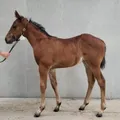
- The timescale. A yearling makes its racecourse debut around a year after it is bought, sometimes later; a horse already in training can run within weeks. It all comes down to how long you are prepared to wait for the first race.
- The trainer. The horse must be placed with a licensed professional. Where the yard is, what it specialises in, how many horses it keeps and what it charges in training fees determine a large part of your budget and of your experience as an owner: choose the trainer before the horse.
- The horse. Once those four points are settled, the list of possible lots shrinks of its own accord. Only then do you start reading pedigrees, assessing conformation and reviewing the veterinary file.
The assessment method (pedigree, conformation, action, veterinary examination) is set out in the guide’s chapter on how to choose a racehorse.
The five most common mistakes of a first purchase
Buying the pedigree rather than the horse
The pedigree sets the price, not the performance: a glittering page costs a lot at purchase and guarantees nothing on the track. For the same budget, a horse from a less fashionable family, well put together and with a clean veterinary record, is often worth more than a prestigious lot bought at the top of its value.
Not checking the repository
At auction, the seller lodges the X-rays and, depending on the sale, the endoscopic examination in the repository before the sale, and vets consult them on behalf of buyers. Have them reviewed by a vet working for you: that is part of a buyer’s normal work. Without it, you are buying an asset without knowing its condition.
Going over your limit in the ring
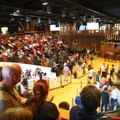
The bidding on a lot often lasts less than two minutes, in a room where the excitement is real. The only sure way to stay within budget: write it down before the session, lot by lot, and stick to it. An overspend agreed at the fall of the hammer is then paid for throughout the horse’s career.
Underestimating the cost of keeping a horse
This is the most costly mistake. The monthly budget keeps running whether or not the horse races, injured or in peak form. An owner who has put all their means into the purchase price ends up forced to sell at the wrong moment. We break down the items in the monthly cost of owning a racehorse.
Buying a whole horse on your own
In a partnership, you come in on a smaller budget: the same horse and the same costs are divided among the partners, who also share the risk. France Galop allows up to twenty people per partnership, including at least one “propriétaire couleurs” (the member whose colours the horse runs in). France Galop describes the recognised forms of ownership, which our frequently asked questions also cover.
The six lines to write down before opening a catalogue
A purchase brief fits in six lines. If you can fill them in, selection becomes a technical job. If not, no catalogue will help you.
- The total budget you are committing over twelve months.
- The share of that budget set aside for the purchase.
- The discipline you are aiming for.
- How long you can wait before the first race.
- The training region you would like.
- What you will do with the horse if it does not race, and what you will do with it if it wins.
The last line is the one most often forgotten, and it decides what comes next. A horse that wins raises the question of selling or keeping it; a horse that does not race, the question of a second career. Both need preparing at the time of purchase, not when they arise.
Key takeaways
- France Galop puts training fees for a Flat or jumps horse in France at between €18,000 and €36,000 a year (“Obtenir son agrément” (owner registration) page, accessed 16 October 2026).
- The monthly costs keep running whether or not the horse races, and whether it is injured or in peak form.
- Flat racing, jump racing and trotting differ in their cost of entry, the time before a horse first runs and the length of a career.
- A glittering pedigree costs a lot at purchase and guarantees nothing on the track.
- The purchase brief should also cover what you will do with the horse if it does not race, and what you will do with it if it wins.
Sources
- Owner registration: “Obtenir son agrément” (France Galop)
- Forms of ownership: “Les formes de propriété” (France Galop)
- Press release, Vente de Yearlings v.2, 19 August 2026 (Arqana)
Frequently asked questions
Where do you start when buying your first racehorse?
How long do you have to wait for the first race?
What is the repository for at an auction?
How do you stay within budget at an auction?
Can you buy a racehorse with other people?
Summarise this article with AI
Open it in your assistant, or read the markdown version.

Written by
Anne-Sophie Yoh-Benet
Founder and bloodstock agent
A graduate of the MESB master’s programme at the University of Dijon, she worked at France Galop and then at French Bloodstock Agency before founding YOHEA in 2018. A dressage rider, she rides at Prix St Georges level.