



The guide · Selection
What to look for when buying a racehorse
For buying, not tipping: the order in which we examine pedigree, conformation, movement and vet file before a sale, and how to make the call when they disagree.
- Pedigree
- Conformation
- Movement
- Vet
763
Yearlings offered at Arqana’s October 2025 sale in Deauville
Arqana, results reported by BloodHorse and TrueNicks, 25 October 2025
600
Yearlings sold at that same sale
Arqana, results reported by BloodHorse and TrueNicks, 25 October 2025
The method
Six steps, from the catalogue to the bidding limit
A horse that passes three readings out of four and fails the last one is a horse to let go.
- 01
Sift by female family
Before the sire and the price: what became of the dam’s previous foals, at what level, over what distances.
- 02
Check how close the black type is
Bold type flags placings in Group and Listed races. A useful brother carries more weight than a famous ancestor four generations back.
- 03
See the horse at its box
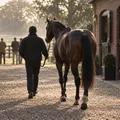
Standing still, then led out: the frame, the overall balance and a first sense of its temperament.
- 04
Watch the horse walk
With a yearling, the walk tells you most: length of stride, path of the limbs, coordination from back to front.
- 05
Have the vet file read
By your vet, in the sale’s repository, for every lot on the shortlist, not just the favourite.
- 06
Make the call and set a limit
A mark for each lot, an order of preference and, for each one, a written bidding limit, fees and VAT included.
The pedigree
What a pedigree tells you, and what it doesn’t
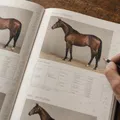
A pedigree is read through the dam, even though the stallion sells: the female line has already proved what it produces, while a fashionable stallion mainly drives up the bidding.
What it tells you
- What became of the dam’s previous foals, including those that never ran
- How close the black type is: a dam who was placed herself, or a useful sister, counts for more than a brilliant family three generations back
- Consistency of distance: a family of sprinters won’t produce a 2,400-metre horse just because you hope it will
What it doesn’t tell you
- Nothing about the horse standing in front of you
- Nothing about its soundness, or its temperament
- Nothing about whether the price is right: a good pedigree at a very high price and a decent pedigree at the right price are two different purchases
Conformation
Conformation: the overall picture first, the detail second
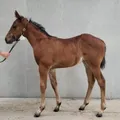
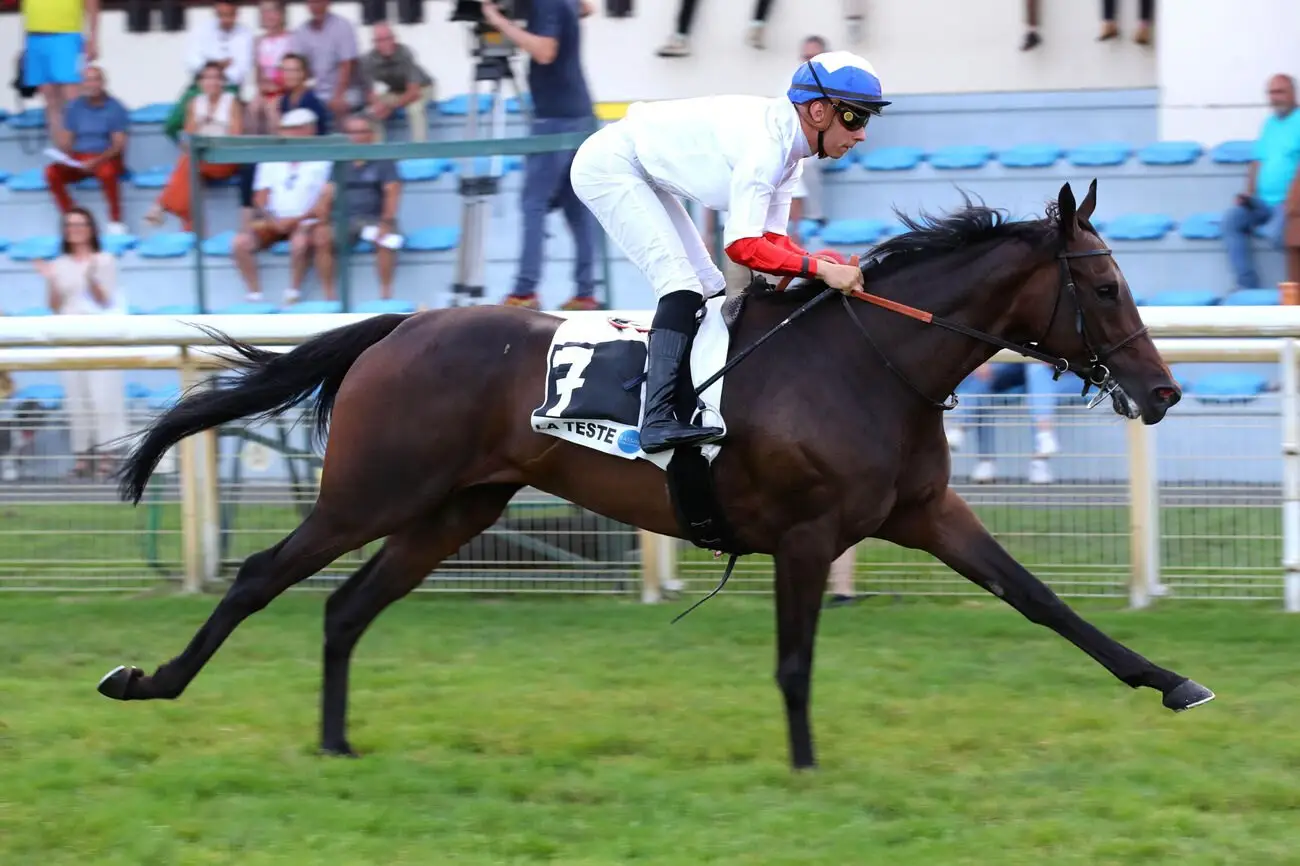
A racehorse has to stand in balance, propel itself forward and cope with speed without losing its action. We examine it in that order, then start again.
Seen again on the last evening, a horse shows you something different from the first morning: fatigue from the sales ground, repeated showings, heat.
- Balance and proportion. Topline, depth of girth, the ratio between forehand and hindquarters. Whatever compensates ends up breaking down.
- Straightness of the limbs. From the front and the side, standing, on level ground. A fault becomes a deal-breaker if it loads a joint already flagged on the X-rays.
- The joints. Fetlocks, knees, hocks: cleanness, symmetry, left always compared with right.
- The feet. Size, shape, symmetry, horn quality. A bad foot is a common, and stubborn, reason for a career cut short.
- The hindquarters. This is the engine: width, length of hip, engagement.
How to choose a racehorse to buy, not to bet on: that is the only question this page deals with. Choosing a racehorse to buy means bringing four independent readings together: the pedigree, the horse’s conformation, its movement and the vet file. The choice is wide: 763 yearlings were offered at Arqana’s October 2025 sale in Deauville. Walking away costs nothing; getting it wrong costs the purchase price, plus twelve months of running costs.
Movement and behaviour when the horse is shown
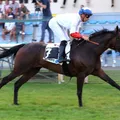
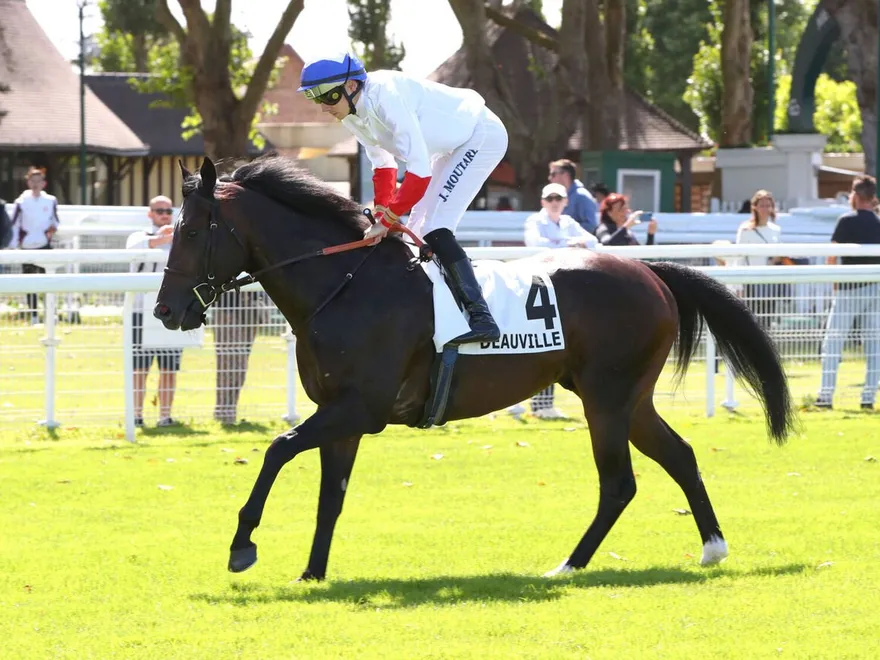
With a yearling, the walk is the gait that tells you most. A horse that walks with a long, regular stride, in a straight line, and places its hind feet ahead of the prints left by its forefeet, has mechanics you can work with. A horse that walks short, plaits or sways will waste energy with every stride in a race.
Behaviour counts just as much. A horse that stays attentive after being shown many times, lets itself be handled without resisting and looks around without panicking has a chance of coping with the parade ring, the horsebox, the starting stalls and the crowds. A horse that fights in its box on the third day of the sale will not improve on its first day in training.
With an older horse, in training or already racing, the reading changes: there is form to go on, and you decipher its race record with a trainer. The real level of the races won, the ground conditions, the distance, the trend over its last few runs: a horse that has won once in a weak race and a horse regularly placed at a higher level are not worth the same price.
What the veterinary examination reveals
The X-ray file and the clinical examination produce a list of findings, never a yes-or-no verdict, and each finding has to be measured against the plan for the horse. Depending on the intended use, the vetting can be limited to a clinical examination or go as far as X-rays and an endoscopy of the airways. Discuss the points that would rule a horse out with your vet before the purchase.
This is the point buyers without an adviser most often misunderstand: the same finding can be acceptable or disqualifying depending on the intended discipline, the horse’s age, its conformation and the planned programme. A horse meant for the Flat at two, for a short career, cannot carry the same reservations as a horse meant for jump racing at five, on soft ground, carrying weight.
Two rules are not up for discussion. You instruct the vet; the vendor never does. And they read the file for every lot on the shortlist before the sale, not only the favourite’s: a lot ruled out on veterinary grounds must have a replacement that has already been examined, otherwise the bidding shifts onto an unknown horse.
How this stage works in practice, how long it takes and the document it produces are covered in our chapter on the seven steps of buying a racehorse.
The bidding limit, a discipline
The bidding limit is written down before you enter the ring and is not revised during the sale. All the selection work can be undone in the few seconds when a buyer goes past their limit because someone else is going past theirs.
We carry out this work for our clients under a racehorse buying mandate, well before the sale. Our reading of pedigrees, applied to breeding, is described on our breeding and mating advice page. For an overview of the market and the routes to purchase, go back to our guide to buying a racehorse in France.
Sources
This page describes a working method rather than figures. The factual points it cites come from the following sources:
- Thoroughbred Daily News, 9 June 2016, announcement of Arqana’s repository: veterinary files, X-rays included, lodged before the sale and available to buyers once the horse has arrived on site, in a dedicated room for yearling sales. Accessed 16 October 2026. thoroughbreddailynews.com
- Arqana, October 2025 yearling sale, Deauville: 763 yearlings offered, 600 sold. Results reported by BloodHorse and TrueNicks, 25 October 2025. truenicks.com
- YOHEA’s former FAQ: choosing a horse according to budget, intended use, age and pedigree; clinical examination, X-rays and endoscopy; points that would rule a horse out to be discussed with the vet.
Weighing it up
Which reservations to accept, which to refuse
No horse passes all four readings without a reservation: some can be priced into the bidding limit, others close the door.
| What is observed | The cautious reading |
|---|---|
| Major veterinary finding on a weight-bearing joint | Rules the horse out, whatever the pedigree and the price |
| Poor foot, mismatched pair | Rules it out for a horse meant to have a long career |
| Isolated limb fault, with no corresponding X-ray finding | Acceptable, to be factored into the bidding limit |
| Modest pedigree, convincing conformation and movement | Acceptable, and often the best value in the catalogue |
| Fine pedigree, disappointing conformation | Rejected: a common trap, and an expensive one |
| Unmanageable behaviour in the box | Rejected, regardless of everything else |

Discipline
Walking away costs nothing.
Getting it wrong costs the purchase price, plus twelve months of running costs.
Frequently asked questions
Choosing a horse to buy: your questions
Where do I start when choosing the right horse?
With your criteria, in writing: budget, intended use, age, pedigree. The right horse is the one that meets those criteria. The agent’s role comes next: steering you and guiding your choice, right through to the purchase.
How do you recognise a good racehorse?
By bringing four independent readings together: the female family in the catalogue, the conformation at its box, the walk, and the X-ray file read by a vet you have instructed. None of the four is enough on its own. When three agree and the fourth doesn’t, walk away.
What do you look for in a yearling’s pedigree?
First the dam and what became of her previous foals: how many raced, at what level, over what distances, how many never ran. Then how close the black type is, meaning the number of generations between the lot and the horses that actually earned it. Then whether the family’s distances fit your plan. The stallion’s name comes after that: it affects the price before it affects performance.
How do you assess a racehorse’s conformation?
The overall picture first, the detail second: balance, proportion, topline, depth of girth. Then the straightness of the limbs, seen from the front and the side on level ground. Then the joints, left compared with right. Then the feet, whose quality and symmetry count for a great deal over a career. And look again: a horse seen only once has not really been seen.
Is it better to buy a yearling or a horse in training?
The yearling is the more uncertain bet of the two. You are judging potential, through pedigree, conformation and walk, and several months of preparation come before its first race. With a horse in training or already racing, you are judging actual form, with a trainer to read the level of the races, the ground and the distances.
Can you rely on a horse’s racing statistics?
As a starting point, never as a conclusion. A horse can show good recent results while carrying a developing condition; another, with modest results, may have been entered at the wrong level. Only by combining a trainer’s reading of its form with an independent vet’s assessment do you get a picture you can use.
Further reading
From selection to purchase
- Auction sales
How a sale works, the calendar and the prices achieved at Deauville.
- The seven steps of a purchase
How it works in practice: timescales, documents, the people involved.
- Breeding and mating advice
Reading pedigrees, applied to broodmares and matings.
- Buying a racehorse
The mandate under which we carry out this work for you.
- Yearling sales, our analysis
What an agent does during the days of a sale.
- Racing glossary
Black type, Listed, repository: the vocabulary used on this page.

A shortlist to examine?
Let’s put your lots through the four readings
Tell us the sale, the discipline and the budget. We read the pedigrees, see the horses and tell you which ones deserve a limit.
- Agency founded in 2018
- More than 1,700 horses sold in 32 countries
- Specialists in pedigrees and matings