



Guide · The owner
Becoming a racehorse owner in France: the steps, in order
One authorisation, owner registration, applied for online. Here are the steps in order, the forms of ownership and what an owner receives, under the rules of France Galop and LeTrot.
- Registration
- Colours
- Partnership
- Prize money
5
Steps to register as an owner with France Galop, online
France Galop, owner registration page
80%
Of owner registration applications processed within a month
France Galop, owner registration page
20
Partners at most in a partnership
France Galop, forms of ownership
The short answer
One registration, and only one
Becoming a racehorse owner in France requires one authorisation: owner registration (the agrément), granted by France Galop for Flat and jump racing and by LeTrot for trotting. The Code des courses au galop, France Galop’s rules of racing, defines the owner as the person, individual or legal entity, who has been approved by the France Galop stewards to race a horse in their colours, to make entries and to collect the sums won.
Registration is a condition of the right to race, not of buying. In a partnership (association), every partner is registered, but only the managing partner needs to be registered as a “propriétaire couleurs”, the owner whose colours the horse carries: you can be a partner and race in someone else’s colours.
- No qualification or exam: an online application, assessed on documents
- A background check while the application is being reviewed
- A company can also apply for registration
The method
Six formalities, in this order
Keep to the order: a horse bought before registration and training have been sorted out waits at livery, unable to race.
- 01
Choose your form of ownership
On your own, in a partnership, through a lease or in a racing club. This choice comes first: it sets the type of registration, who signs and who decides.
- 02
Apply for registration, with supporting documents
Online, with France Galop for Flat and jump racing: proof of identity, proof of address, a tax notice, bank details. For trotting, on Infonet, LeTrot’s platform for owners.
- 03
Choose your colours
In the same application, you design your silks and cap. France Galop offers 18 colours and 25 patterns.
- 04
Let the application be processed
A representative of the French Ministry of the Interior contacts you for a background check. France Galop processes 80% of applications within a month, then validates them with the Service central des courses et jeux, the French police unit responsible for racing and gaming.
- 05
Choose your trainer
Before the horse. The trainer sets the location, the monthly cost and the race programme open to you, and will tell you whether the horse you have in mind matches what they know how to do.
- 06
Buy and register the transfer
Any change of ownership is declared to the France Galop stewards, or to LeTrot for trotting. The horse’s identification document, registered with the SIRE, France’s national equine register kept by the IFCE (the French Horse and Riding Institute), is checked on arrival.
Forms of ownership
On your own, with others or in a club
France Galop sets out four forms of ownership. Each determines the risk you carry and the decisions that are yours.
| Form | What it is | Who decides | Who it suits |
|---|---|---|---|
| Sole ownership | The horse races in your colours, with you registered as “propriétaire couleurs”; you alone bear the costs and you alone receive the winnings | You | An owner who wants to decide alone and can carry twelve months of costs alone |
| Partnership (association, shared ownership) | Up to 20 people per partnership, with at least one propriétaire couleurs on the contract; the others can be registered as partners | The managing partner, within the terms of the contract | Getting in with others: costs divided, winnings shared pro rata |
| Leasing | Racing a horse that belongs to a third party, without buying it, under a contract registered by France Galop; a managing lessee can bring several lessees together | The lessee, or the managing lessee | Racing without buying the horse |
| Racing club (écurie de groupe) | A grouping of people or capital that owns one or more horses, in which each member holds a share | The manager, under the articles of association | A first experience: France Galop describes it as the “most affordable and accessible way to discover the world of racing” (our translation) |
Sources: France Galop, becoming an owner, forms of ownership and racing club pages; Code des courses au galop, article 11. Accessed 16 October 2026. For trotting, LeTrot groups the forms into three approaches: individual (sole ownership), team (partnership, leasing) and club (société de personnes, société commerciale, société en participation, three French partnership and company structures).
What an owner receives
75% to the owner, plus premiums
On the Flat: the owner’s share of the prize money due to their horse, then the premiums reserved for horses born and raised in France, or treated as such.
75%
Of the horse’s share of prize money, paid to the owner
France Galop, becoming an owner FAQ
+75%
Owners’ premium, Flat, 2- and 3-year-olds born and raised in France
France Galop, becoming an owner FAQ
+45%
Owners’ premium, Flat, horses aged 4 and over
France Galop, becoming an owner FAQ
+33%
Owners’ premium, Flat, Group 1 races
France Galop, becoming an owner FAQ
Silks and colours
Your colours, chosen in the application
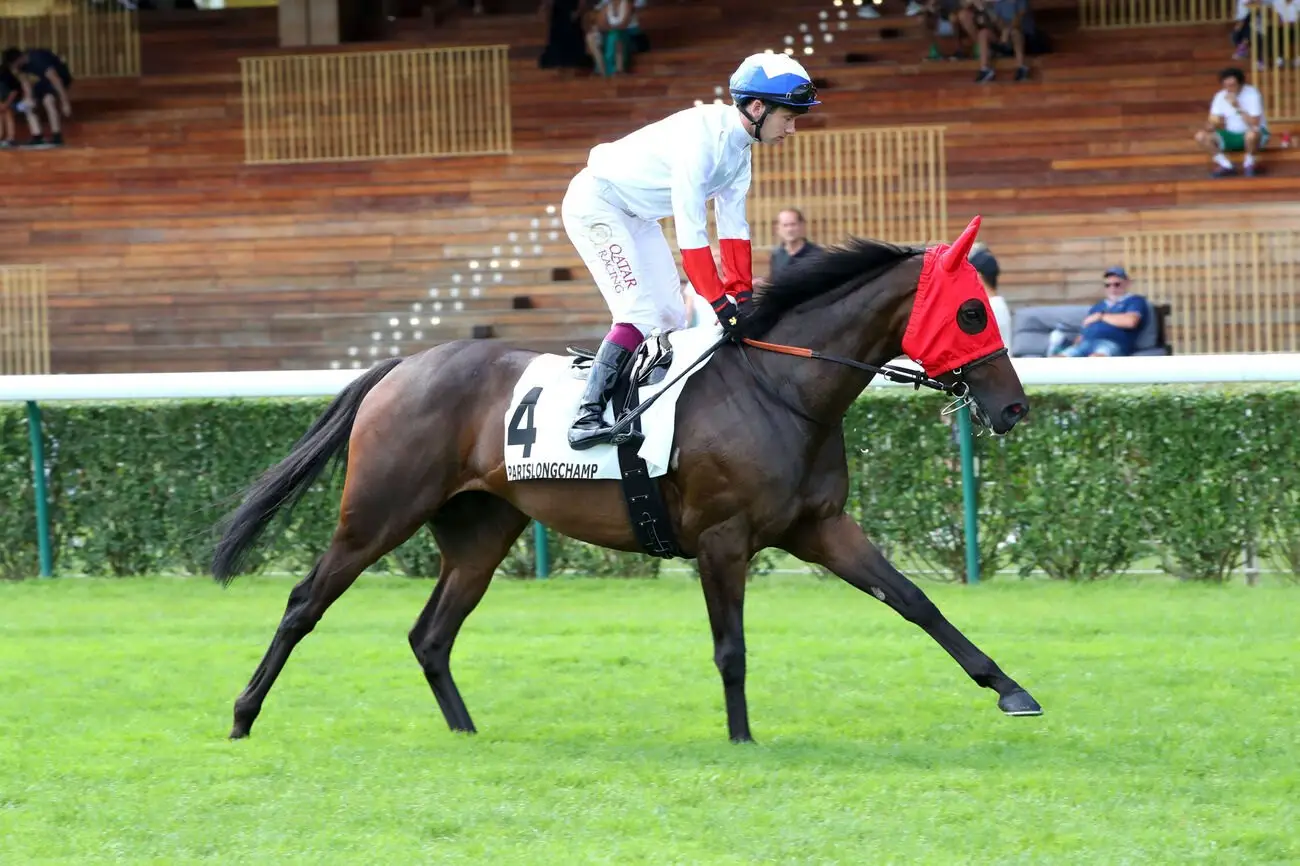
Your colours identify your horse on the racecourse and in the results. At France Galop, you design the silks and cap from 18 colours and 25 patterns, within the registration application itself.
The Code des courses au galop describes the patterns for the body of the silks, the sleeves and the cap separately. The silks themselves are ordered from a maker, quite apart from registration.
Who can become an owner?
Any individual or legal entity. France Galop requires no qualification or exam: the registration application is made online and assessed on documents, and it includes a background check carried out while the application is under review. Registration exists because the public bets on racing: the institution checks who is racing horses, not what you know how to do.
A first project therefore fails on a badly set budget, not on an entry requirement. According to France Galop, 80% of registration applications are processed within a month; a budget that cannot last twelve months comes to light in the fourth. The real amounts, with their sources, are in our chapter on the price of a racehorse and its monthly cost.
Owner registration: what France Galop asks for
Registration is a decision, not a formality. France Galop reviews the application, and a representative of the French Ministry of the Interior contacts the applicant for a background check. The Service central des courses et jeux and France Galop then validate the application, and France Galop gets back to the applicant.
The application is made online, through a dedicated account separate from France Galop’s public account, and can be picked up again later. There are two types: sole ownership or partnership. For an individual, the documents are the same whatever the application (partner, propriétaire couleurs or lessor): proof of identity, proof of address less than three months old, a tax notice and bank details. A company can also apply for registration, through France Galop’s Licences department. Once registration has been granted, France Galop offers a racecourse access card and a subscription to the daily Jour de Galop, free for three years.
On your own or with others: the case for partnerships
A partnership is often the sensible choice. A horse held by ten partners in equal shares costs each of them a tenth of the monthly costs: enough to see out a whole career instead of stopping after a few months for lack of cash.
The trade-off is governance. A contract that does not say who decides to sell, to change trainer or to stop will produce a dispute. Read it for what it provides on the day the partners disagree.
What an owner earns, and how
In a Flat race, the prize money is shared among the first five: 50% to the winner, 20% to the second, 15% to the third, 10% to the fourth, 5% to the fifth; some races also pay sixth and seventh place. Of the share due to a horse, the owner receives 75%, the trainer 14%, the jockey 8.5%, and 2.5% covers social charges.
On top of this come owners’ premiums, reserved for horses born and raised in France, or treated as such. France Galop sets them, on the Flat, at 75% of the prize money for a 2- or 3-year-old, 45% for a horse aged 4 and over, and 33% in Group 1 races; over jumps, at 15% for fillies and mares aged 3, 4 and 5. This uplift is a strong reason to look at French-bred horses first.
The full calculation, costs included, is in our chapter on the returns and risks of a racehorse.
What you need to do every month, and what we do
Your own obligations are administrative and financial: paying the training fees and other costs, keeping your status up to date with the racing authority, and taking the decisions that are yours to take, notably whether to sell or to stop.
The rest is hands-on oversight: the race programme, the conversations with the trainer, the judgement calls when the horse is improving or no longer improving. Managing horses in training and at stud is the purpose of our racing stable management mandate.
Sources
- France Galop, Devenir propriétaire (becoming an owner) and Obtenir son agrément (obtaining owner registration): online application in five steps, documents required, choice of colours (18 colours, 25 patterns), background check, 80% of applications processed within a month, validation by the Service central des courses et jeux, Licences department for companies. Accessed 16 October 2026. france-galop.com
- France Galop, Les formes de propriété (forms of ownership): sole ownership and shared ownership, no more than 20 people per partnership, at least one propriétaire couleurs, managing lessee, managing partner, racing club. Accessed 16 October 2026. france-galop.com
- France Galop, Devenir propriétaire (becoming an owner) and Écurie de groupe (racing clubs): four forms of ownership (sole ownership, partnership, leasing, racing club), a racing club being defined as a grouping of people or capital that owns one or more horses. Accessed 16 October 2026. france-galop.com
- France Galop, becoming an owner FAQ: distribution of prize money among the first five (50, 20, 15, 10, 5%), split between owner (75%), trainer (14%), jockey (8.5%) and social charges (2.5%), owners’ premiums of 75%, 45% and 33% on the Flat and 15% over jumps, training fees of €1,500 to €3,000 a month. Accessed 16 October 2026. france-galop.com
- France Galop, Code des courses au galop (the rules of Flat and jump racing), article 11: definition of the owner, leasing and partnership; article 13: declaration of any change of ownership; appendix 4: patterns for the body of the silks, the sleeves and the cap. france-galop.com
- LeTrot, Devenir propriétaire (becoming an owner): sole ownership, partnership, leasing, société de personnes, société commerciale, société en participation; registration process on Infonet. Accessed 16 October 2026. devenir-proprietaire.letrot.com
- IFCE, SIRE database: identification of equines present in France.
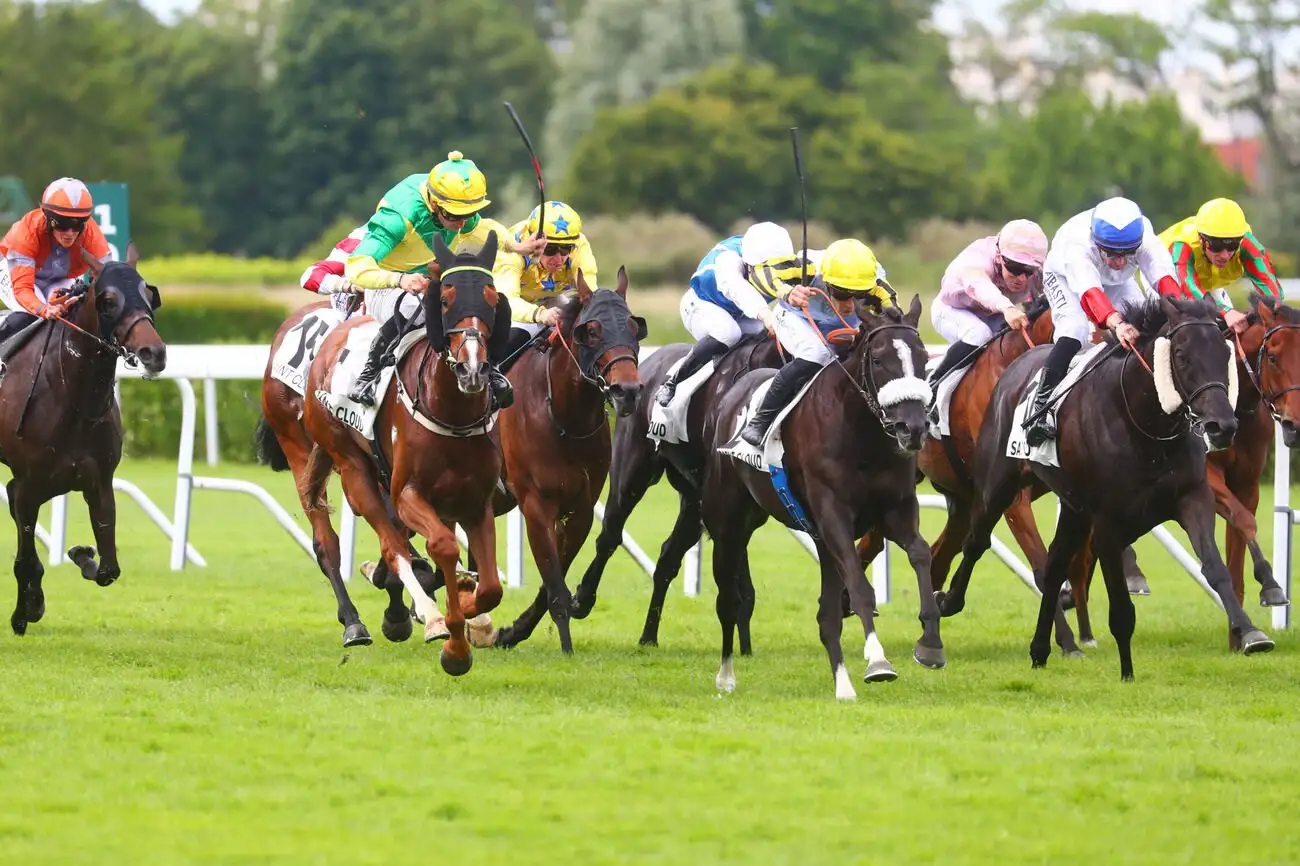
Winnings
You still have to finish in the first five.
On the Flat, a race’s prize money is shared among them: 50, 20, 15, 10 and 5%. Owners’ premiums then come on top.
Frequently asked questions
Your questions before becoming an owner
Do you need to be registered to own a racehorse in France?
Yes, to race a horse in your name and colours; the purchase itself does not depend on it. Registration is granted by France Galop for Flat and jump racing and by LeTrot for trotting, and you apply online with France Galop. In a partnership, every partner is registered, but the contract needs only one “propriétaire couleurs”: you can be a partner without racing in your own colours.
What are the steps to becoming an owner?
In this order: choose your form of ownership, apply for registration online, supply the documents (proof of identity, proof of address, tax notice, bank details), choose your colours, let the application be processed, which includes a background check, choose your trainer, then buy and have the transfer of ownership registered. France Galop says it processes 80% of registration applications within a month.
Who can buy a racehorse?
Any individual or legal entity. The Code des courses au galop reserves the status of owner, in the sense of entering horses in races, to those approved by the France Galop stewards. The application is assessed on documents and includes a background check; no qualification or exam is required.
How do you get your racing silks and colours?
At France Galop, colours are chosen in the registration application: you design the combination of silks and cap from 18 colours and 25 patterns, and the institution registers it with your application. The silks themselves are then ordered from a maker.
How much does a racehorse owner earn?
It depends on placings. On the Flat, the first five share a race’s prize money (50, 20, 15, 10 and 5%). The owner receives 75% of their horse’s share, plus a premium of 33% to 75% of the prize money for a horse born and raised in France (or treated as such). Against €18,000 to €36,000 of annual costs, it takes regular placings to come close to breaking even.
What are a racehorse owner’s obligations?
Paying the costs, keeping your status up to date with the racing authority, and taking responsibility for decisions about the horse’s career. On top of that comes an obligation in practice: deciding when it ends. A horse that is no longer improving costs as much as a horse that wins, and its retraining has to be prepared before it becomes urgent.
Further reading
Before and after registration
- The price of a racehorse
What a horse costs to buy, then every month, with sourced figures.
- Returns and risks
The full calculation, prize money, premiums and costs included.
- Racing stable management
Overseeing a horse in training, once you are registered and the horse is bought.
- Racehorse buying
Our buying mandate, from the written brief to bidding on your behalf.

Your first horse?
Step into ownership with the right support
Form of ownership, choice of trainer, first purchase: tell us where you stand, and we will tell you where to start.
- A first conversation, with no commitment
- Agency founded in 2018
- More than 1,700 horses sold in 32 countries