




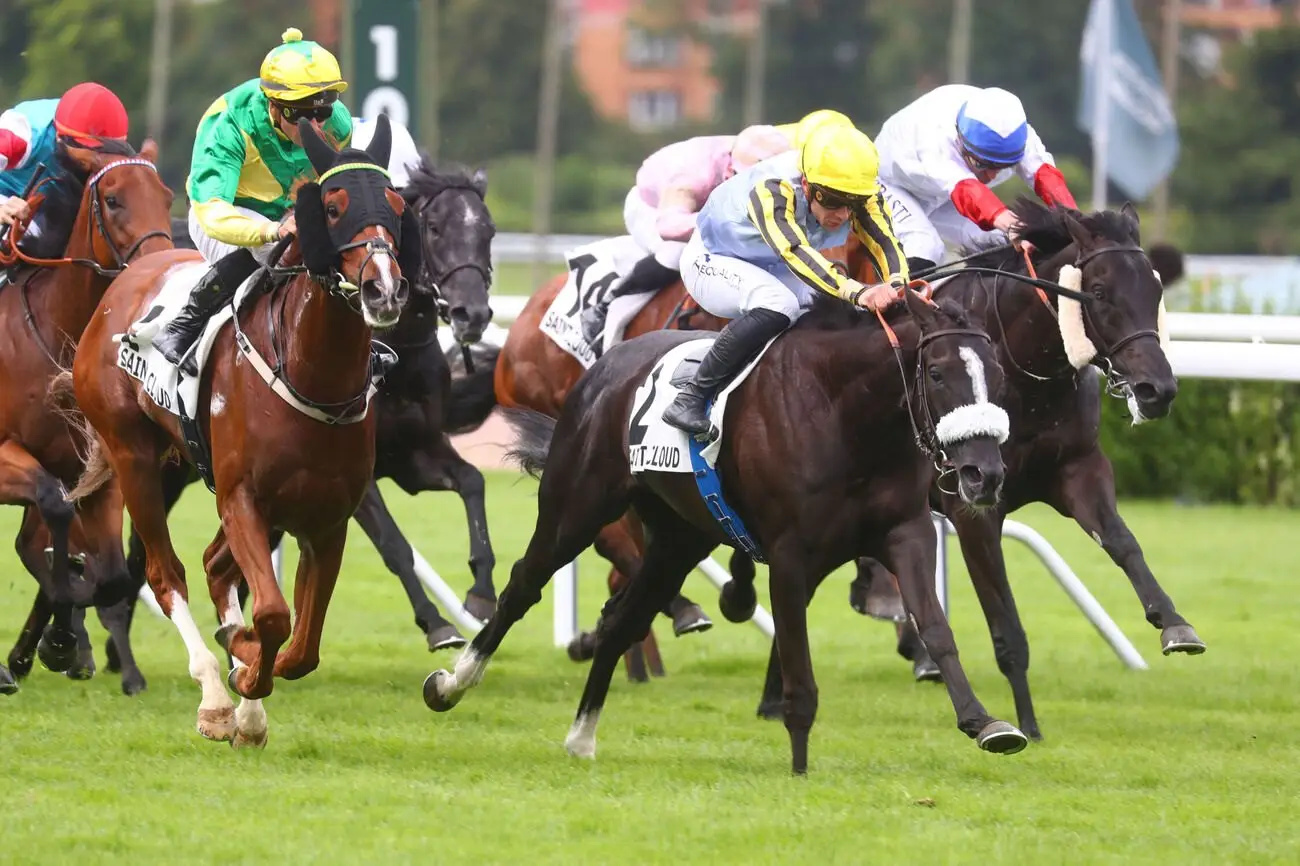
Guide · The budget
How much does a racehorse cost? The real prices
The purchase price, paid once, and the cost of keeping the horse, paid every month: sale by sale and cost by cost, every figure with its source and date.
- Purchase price
- Median
- Training fees
- Buyer’s fee
€160,000
Median price, yearlings, Arqana, August 2026
Arqana, sale results
€23,000
Median price, yearlings, Arqana, October 2025
TrueNicks (BloodHorse)
€1,500 to €3,000
Monthly training fees for one horse in France
France Galop, accessed 16 October 2026
To buy
Three public sales, three markets
No average price sums up the market. Here are the public results, sale by sale, that anyone can check.
| Sale (operator, venue, date) | Lots sold | Median price | Average price | Total |
|---|---|---|---|---|
| Yearlings, August 2026, Arqana, Deauville | 236 of 296 offered, or 80% | €160,000 | €277,682 | €65,533,000 under the hammer |
| Yearlings, October 2025, Arqana, Deauville | 600 of 763 offered, or 79% | €23,000 | €42,333 | €26,421,000 |
| Vente d’Élevage (breeding stock sale), December 2025, Arqana, Deauville | 666, or 77% | €28,000 | €70,850 | €47,187,300 |
Sources: Arqana, The August Sale 2026 results (accessed 16 October 2026); TrueNicks (BloodHorse), October 2025 yearling sale; BloodHorse, December 2025 Vente d’Élevage. The October 2025 total includes sales concluded after the horses had been through the ring.
Reading a sale result
The median, the only figure that describes the market
At the August 2026 sale, the average of €277,682 is pulled up by ten yearlings sold for at least a million euros, including a colt by Wootton Bassett knocked down for €4,600,000, a record for a yearling sold in France. The median, €160,000, says more about what the ordinary buyer pays.
The October sale opens the market to other budgets: for the same breed and age, more than twice as many lots as in August, and a median seven times lower. The December Vente d’Élevage, broodmares and foals, sits between the two.
For trotters, LeTrot puts prices between €1,000 and several hundred thousand euros, depending on pedigree and performance.
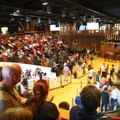
Racehorse auctions, from sale session to catalogue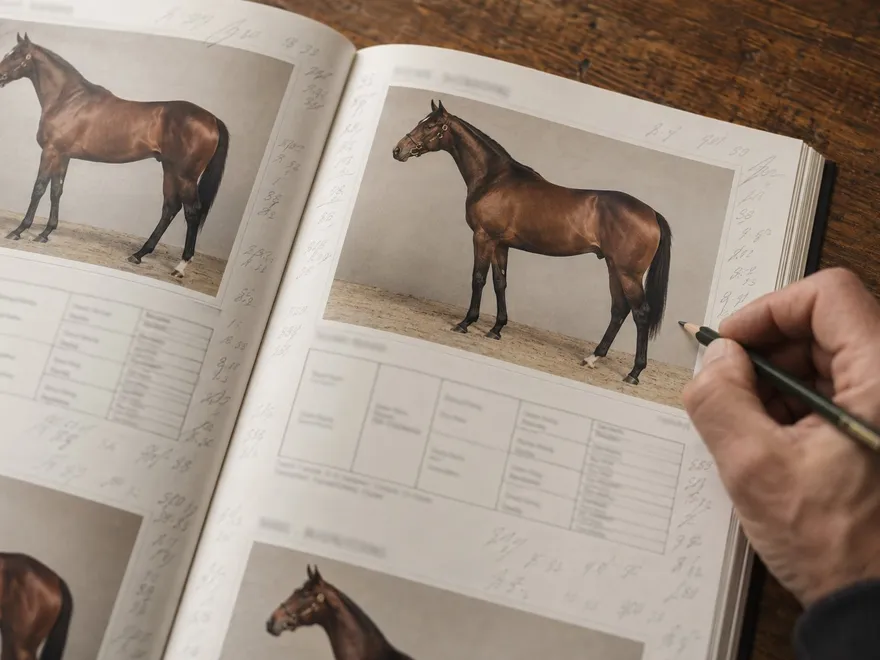
Ways to buy
The price depends on how you buy
At auction, the hammer price is not the price you pay.
- 01
At auction
The price is public. At Arqana, a buyer’s fee of 6% excluding VAT is added to the hammer price, then VAT on the total: 20% for a horse of racing age, a yearling or a foal, 10% for a covered mare or a stallion. A yearling knocked down for €23,000 from a VAT-registered seller therefore costs €1,380 in fees excluding VAT and €4,876 in VAT, or €29,256 including VAT. A VAT-registered buyer recovers the VAT; a private individual does not.
- 02
By private sale
No published reference price. The seller knows the horse, the buyer does not: the gap between asking price and real value can be at its widest here, in either direction.
- 03
Out of a claiming race
The claiming price shown on the racecard is a floor: after the race, each buyer lodges a claim of at least that amount, and the highest wins. The only route where you buy a horse you have just watched run; the sale carries no warranty from France Galop.
- 04
As a foal
It is bought privately from the breeder or at a breeding stock sale. Its price rests on no performance, and it does not race before the age of two: two seasons of costs come before its first race entry.
The imbalance
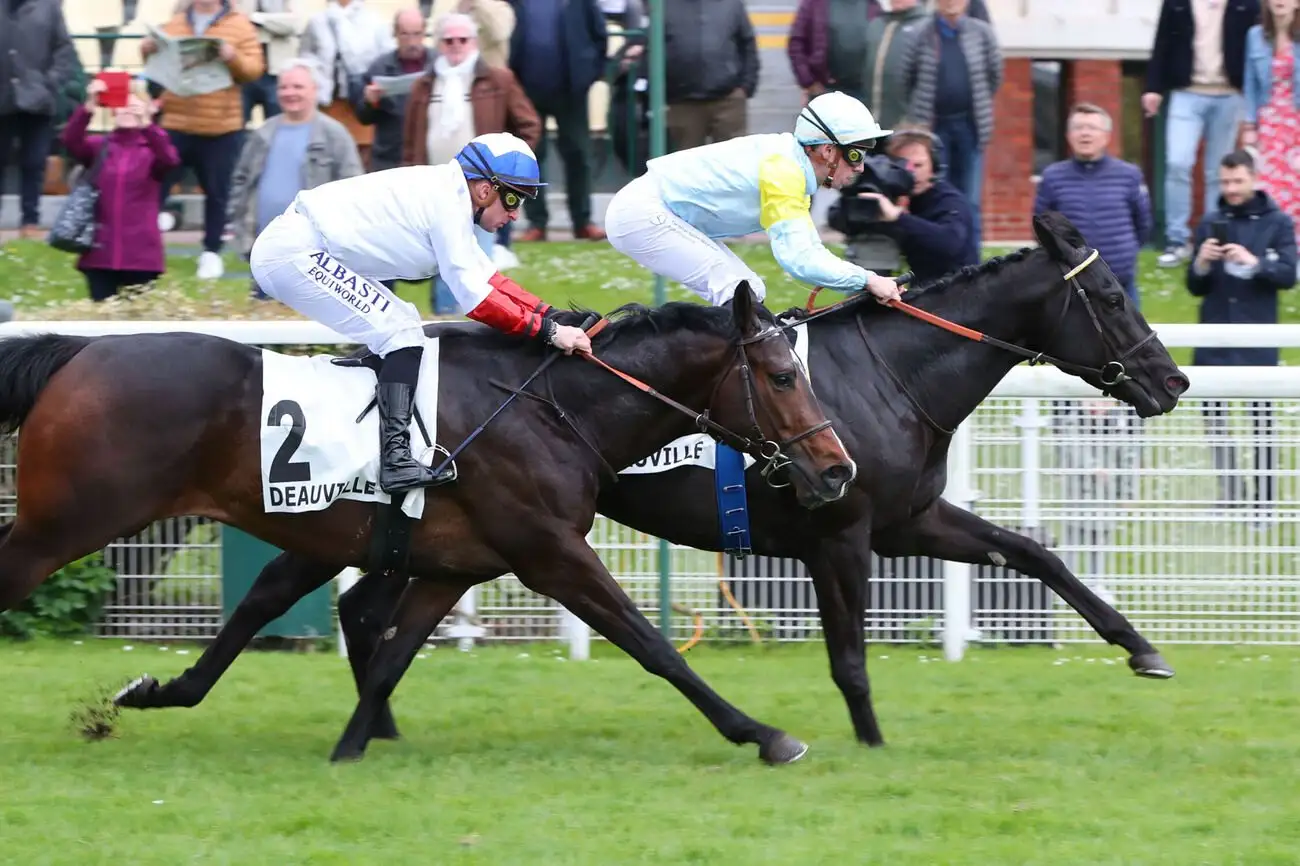
Bought for €23,000, a horse costs more to keep than to buy.
At €1,500 a month in training fees, France Galop’s lower figure, costs overtake the October 2025 median price from the sixteenth month; at €3,000, the upper figure, from the eighth.
Every month
What a horse in training costs
The two institutional references published, with no interpolation on our part.
| Cost item | Flat and jumps, France (France Galop) | Trotting, France (LeTrot) |
|---|---|---|
| Livery and training | €1,500 to €3,000 a month, or €18,000 to €36,000 a year | €25 to €50 excluding VAT a day, or €750 to €1,500 excluding VAT a month |
| Pre-training and breaking | Not published | €15 to €20 excluding VAT a day |
| Farriery | Not published separately | €30 to €80 a month |
| Race entries | Not published separately | Usually €15 to €25 per race |
Sources: France Galop, becoming an owner FAQ; LeTrot, guide to buying a trotter and its costs. Accessed 16 October 2026.
The price of a racehorse comes down to two amounts that must be kept apart. To buy: the median was €160,000 at Arqana’s August 2026 yearling sale in Deauville, and €23,000 at the same house’s October 2025 yearling sale. To keep: France Galop puts the training fees for a horse in training in France at €1,500 to €3,000 a month, or €18,000 to €36,000 a year.
What France Galop’s range covers
Two points on the monthly table. France Galop’s range is a training fee budget: depending on the trainer, it may or may not include farriery and routine care, and only the training agreement says which. The gap between Flat or jumps and trotting also goes beyond rates: the race programme, the number of races per season and the age at which horses start racing differ from one discipline to the other. We go into this trade-off in our chapter on choosing between Flat, trotting, AQPS and jumps.
The costs the institutions do not quantify
Four items are left out, wholly or partly, of what the institutions publish, and they are often the ones that blow a budget.
Pre-purchase vetting. A vet appointed by you, never by the seller, examines the horse before the transaction: clinical examination, X-rays of the limbs, endoscopy of the airways where relevant. Its cost depends on the number of examinations requested. It is the most useful expense in the process, the only one that can make you walk away in time.
Transport. It is charged per journey and by distance. A horse bought at Deauville and trained in the provinces bears the cost of one journey on sale day, then one for every trip to the races.
Insurance. Optional, it is calculated on the insured value. It makes sense on an expensive horse, much less on a horse bought for the price of a claim.
Entries and race costs. These vary with the type of race; LeTrot gives €15 to €25 per race for trotting. On winnings, the split is fixed: the owner receives 75% of the prize money due to their horse, the trainer 14%, the jockey 8.5%, and 2.5% covers social charges (France Galop, accessed 16 October 2026).
For these four items, ask each party for a written quote before buying: vet, transporter, insurer, trainer.
What minimum budget to start with
The question to ask: what is the smallest budget that lasts twelve months? Three structures answer three budgets.
- On your own, with an entry-level horse. A purchase at the October sale or out of a claiming race, plus twelve months of costs. With the October 2025 median at €23,000, or €29,256 including VAT and buyer’s fee for a private individual when the seller is VAT-registered, and France Galop’s training fees at €18,000 a year, the first year comes to more than €47,000, transport and vetting not included.
- In a partnership (association). France Galop allows up to 20 people per partnership, with at least one “propriétaire couleurs”, the owner whose colours the horse carries, on the contract. The same horse and the same costs are divided among the partners: you share both the risk and the decisions.
- In a racing club (écurie de groupe). France Galop describes it as the “most affordable and accessible way to discover the world of racing” (our translation). The cost of entry is the lowest of the three, and control over decisions the most limited.
Our chapter on the steps to becoming a racehorse owner sets out the conditions of each form, owner registration and colours.
Sources
- Arqana, The August Sale 2026 results, Deauville: 236 sold out of 296 offered, median €160,000, average €277,682, €65,533,000 under the hammer, top price €4,600,000. Accessed 16 October 2026. arqana.com
- Thoroughbred Daily News, “What We Learned at Arqana: Eight Key Points”, 17 August 2026: ten yearlings sold for at least a million euros, a record €4,600,000 for a colt by Wootton Bassett, a new record for a yearling sold in France. thoroughbreddailynews.com
- Arqana, October 2025 yearling sale, Deauville: 600 sold out of 763, median €23,000, average €42,333, total €26,421,000. Results reported by TrueNicks (BloodHorse), 25 October 2025. truenicks.com
- Arqana, Vente d’Élevage (December breeding stock sale) 2025, Deauville: 666 sold, median €28,000, average €70,850, total €47,187,300. Results reported by BloodHorse, December 2025. bloodhorse.com
- Arqana, Buying page and conditions of sale: buyer’s fee of 6% excluding VAT on top of the hammer price, VAT of 10% or 20% depending on the category of horse, calculated on the hammer price plus fees. Accessed 16 October 2026. arqana.com
- France Galop, Devenir propriétaire (becoming an owner), Les formes de propriété (forms of ownership) and FAQ: training fees of €1,500 to €3,000 a month, distribution of winnings, owners’ premiums, tax regimes, forms of ownership, including the racing club (écurie de groupe), described as the “most affordable and accessible way to discover the world of racing” (our translation). Accessed 16 October 2026. france-galop.com
- France Galop, Code des courses au galop (the rules of Flat and jump racing), article 183: buying horses entered to be claimed, a claim at least equal to the stated price, the highest claim wins, sale with no warranty from France Galop. france-galop.com
- LeTrot, Devenir propriétaire (becoming an owner), Achat et coût d’un trotteur guide (buying a trotter and its costs): purchase price, training fees, pre-training, farriery, entries. Accessed 16 October 2026. devenir-proprietaire.letrot.com
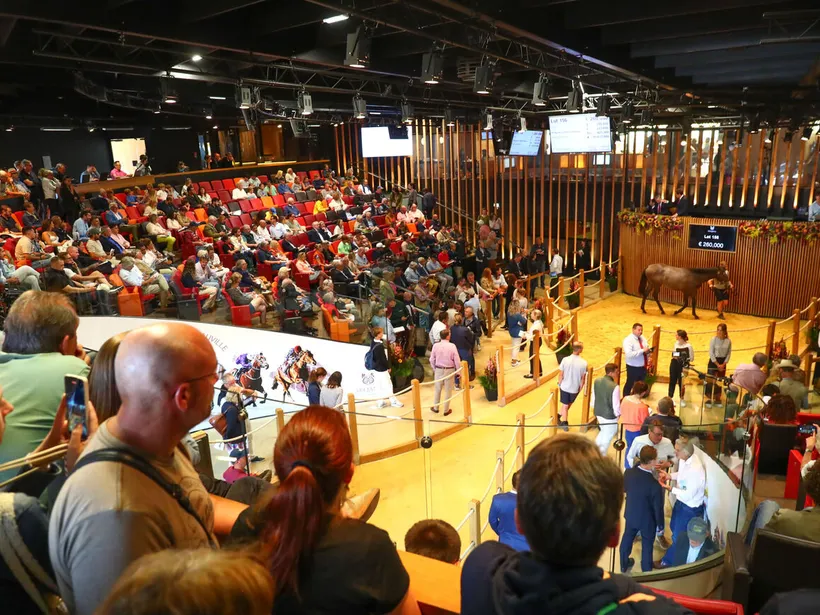
At the top of the market
Grand Glory, €2,500,000
Arqana Vente d’Élevage · Deauville · December 2021
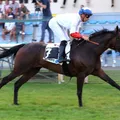
At Arqana’s December 2021 breeding stock sale, we bought the mare Grand Glory for €2,500,000 on behalf of Xavier Marie and Haras de Hus. She had won the Prix Jean Romanet (Gr.1) at Deauville in August 2021; she also finished 5th in the 2022 Prix de l’Arc de Triomphe and 3rd in the Prince of Wales’s Stakes.
In December 2025, the same sale recorded a median of €28,000. The median shows where transactions are concentrated; the price of a Group 1 winner, what an established performance is worth.
€2,500,000
Hammer price, December 2021
€28,000
Median at the same sale, December 2025
Public sources: Wikipedia, Grand Glory (Arqana breeding stock sale, December 2021, €2,500,000, buyer YOHEA); France Galop, article on Grand Glory in the Allez France series; BloodHorse, Arqana breeding stock sale, December 2025.
Grand Glory’s profileFrequently asked questions
The price of a racehorse, in six questions
What is the average price of a racehorse?
No average price is useful: it is the most misleading figure in the market. At Arqana’s August 2026 yearling sale, the average was €277,682 and the median €160,000; the gap is mainly down to the ten lots sold for at least a million euros. Always look at the median, and always sale by sale.
What is the average price of a yearling?
A median of €160,000 at Arqana’s August 2026 sale, and a median of €23,000 at the same house’s October 2025 sale. These are two distinct markets under the same word: the August sale brings together around three hundred selected yearlings, while the October sale offers more than seven hundred.
How much does a racehorse cost per month?
Between €1,500 and €3,000 in training fees for a Flat or jumps horse in training in France, or €18,000 to €36,000 a year (France Galop, accessed 16 October 2026). Between €750 and €1,500 excluding VAT for a trotter, based on €25 to €50 excluding VAT a day (LeTrot, accessed 16 October 2026). Farriery, vet bills, transport and entry fees come on top, depending on what the training agreement covers.
Should you insure a racehorse?
It is not compulsory. Mortality insurance is calculated on the insured value: it is worth having when losing the horse would be a heavy blow, so on an expensive horse or one you own alone. On an entry-level horse, compare the annual premium with the purchase price before deciding.
How is a racehorse taxed in France?
Three regimes, according to France Galop. Non-involved (everything left to professionals): prize money and premiums outside income tax; capital gains taxed at 36.2% (19% plus 17.2% social contributions), with a 5% allowance per year of ownership beyond the second. Involved non-professional: non-commercial profits (bénéfices non commerciaux, BNC), losses offset only against income of the same kind. Professional: professional BNC, horses depreciable over three years. Check yours with a tax adviser.
Can a racehorse pay back its purchase price?
For a minority of horses, yes; do not buy one on that assumption. On the Flat, owners’ premiums add 33% to 75% of the prize money for a horse born and raised in France (or treated as such), without automatically offsetting €18,000 to €36,000 of annual costs. The full calculation is in our chapter on the returns and risks of a racehorse.
Further reading
After the budget
- Becoming an owner
Owner registration, colours and forms of ownership, in order.
- Returns and risks
What prize money and premiums bring in, and what they do not guarantee.
- Racehorse auctions
How a sale session runs and the calendar of French sales.
- Racehorse buying
Our buying mandate, from setting the budget to bidding on your behalf.

Setting a budget?
A budget that lasts twelve months
Tell us what you want to commit, purchase and costs included. We will tell you what the market has to offer at that price.
- A first conversation, with no commitment
- Agency founded in 2018
- More than 1,700 horses sold in 32 countries