







Service 04 · Breeding
Racehorse breeding advice
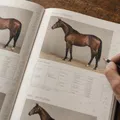
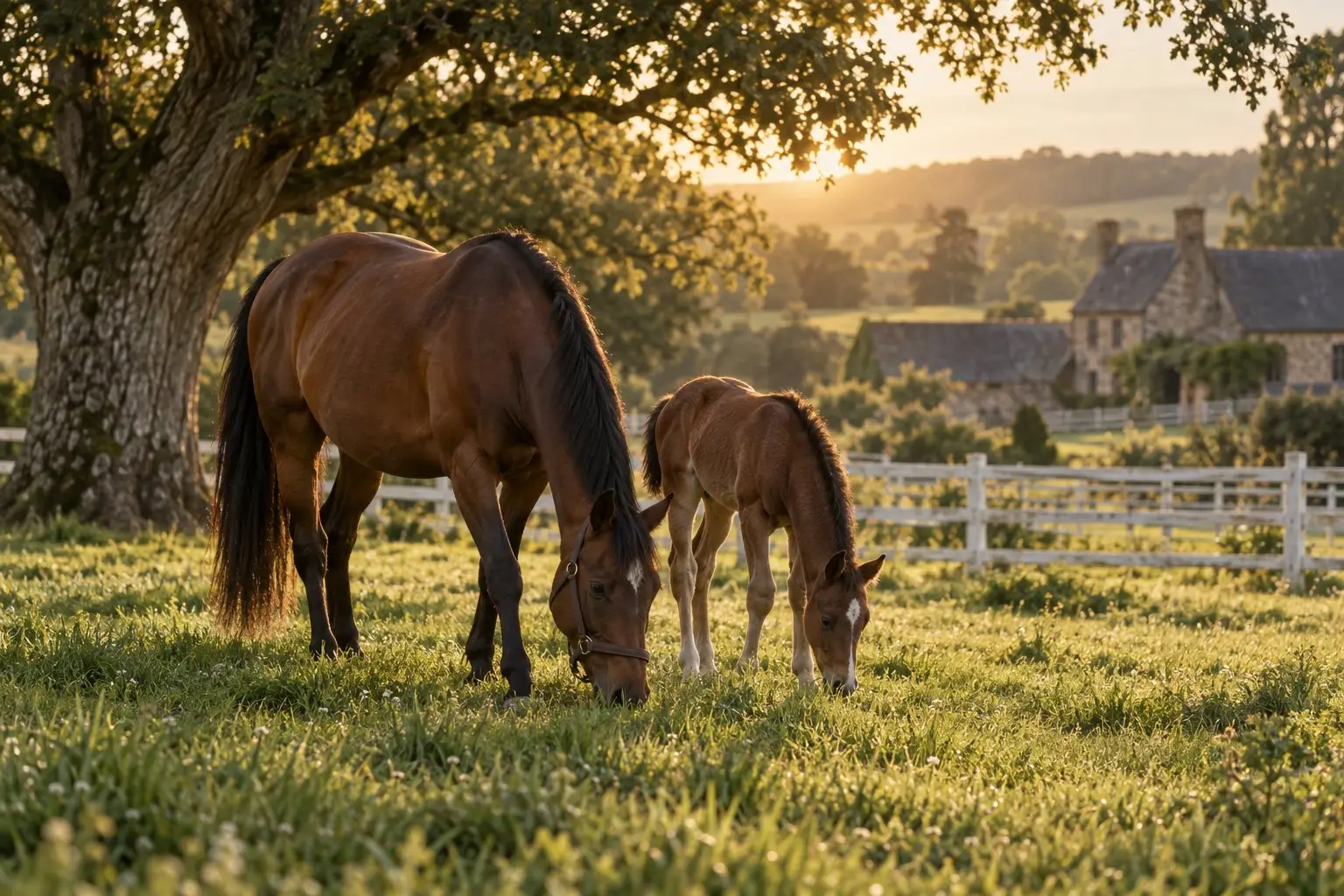
As pedigree specialists, we advise our clients on their matings, and on everything that surrounds a breeding operation: transport, nutrition, equestrian property.
- Pedigree
- Mating
- Broodmare
- Stud book
€2,500,000
Grand Glory, bought at a breeding stock sale
Arqana, December 2021
1,700+
Horses sold in 32 countries
YOHEA brochure, July 2024
2022
Took over the running of Haras de Hus
Our advice
Three decisions commit a breeding operation for years
Which mare to buy or keep, which stallion to send her to, and what to do with her produce. Everything else follows from those.
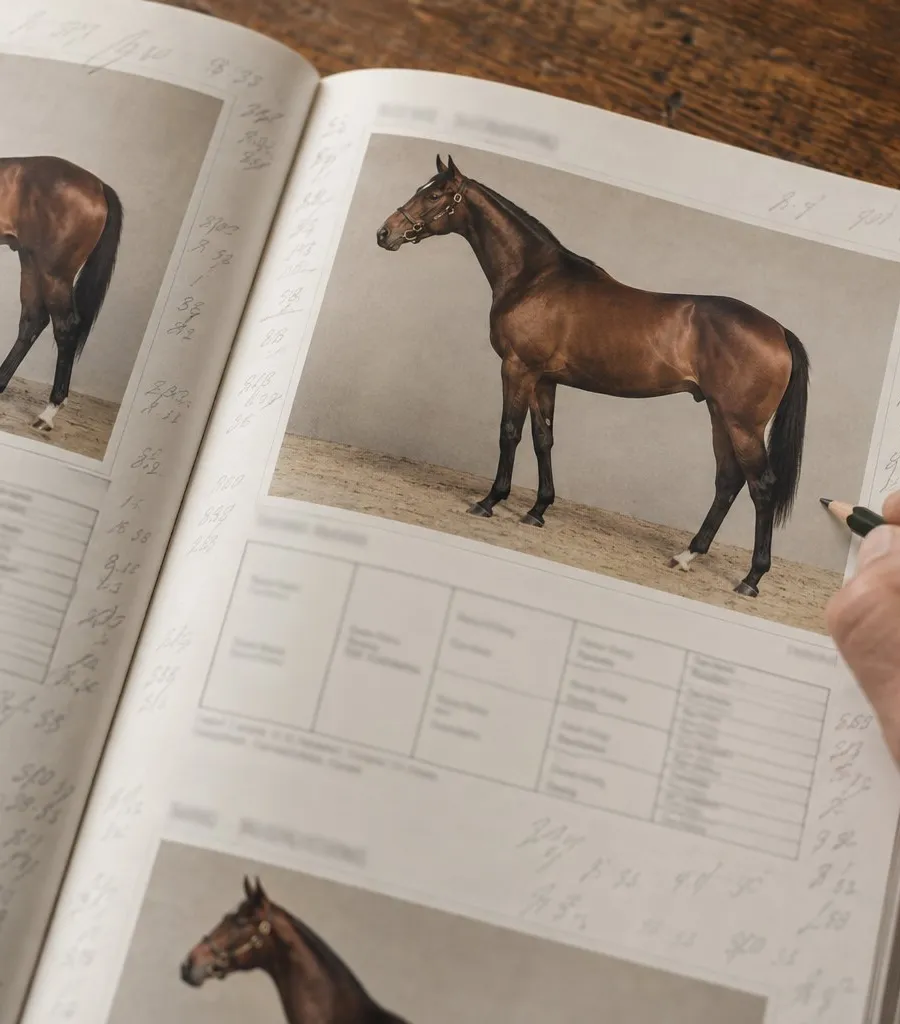
We advise on those matings with the eye of an agent who buys and sells in the sale ring: a mating is also judged by what a buyer will make of the foal when reading its catalogue page.
In 2022, Anne-Sophie Yoh-Benet took over the running of Haras de Hus (show jumping and dressage).
- Pedigree analysis and choice of matings
- Advice on transport, nutrition and equestrian property
Reading a pedigree
Six steps to reading a pedigree, in order
None of them is optional.

- 01
Identify the dam and her produce
How many of her foals are of racing age, how many have run, how many have won. A mare with four winners from four runners is worth more than a champion’s sister who has produced nothing.
- 02
Spot the black type and its generation
The names in bold in the catalogue indicate Group and Listed performances. The first or second generation carries weight, the fifth says very little.
- 03
Read the family’s aptitude
Trip, ground, precocity. A family of milers will not produce a stayer just because it has been crossed with a staying sire.
- 04
Check that the mating makes sense
The stallion’s profile should make up for what the mare lacks, not repeat what she already has.
- 05
Verify the bloodlines
The stud book records births and parentage. France Galop, France Sire and the IFCE give access to race records and produce.
- 06
Test it against the market
What the produce of this cross has fetched at recent public sales. This is the step that turns an analysis into a buying decision.
The broodmare band
Breeding stock is managed like a portfolio
Buy into families that produce, move on mares that no longer produce, never keep a broodmare out of sentiment.
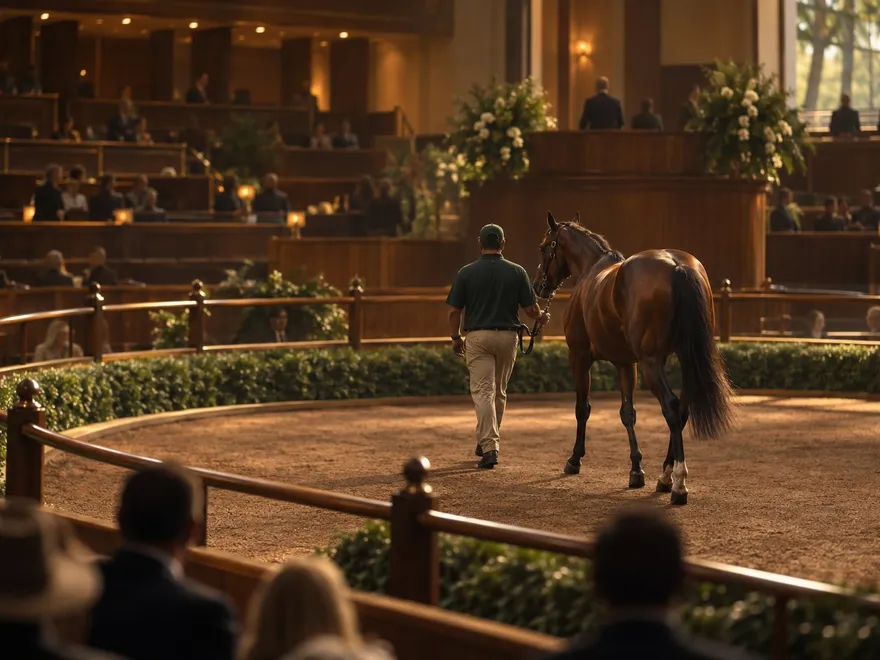
We manage horses in training as well as breeding stock, sometimes for the same client: in October 2021, in Deauville, Anne-Sophie Yoh-Benet bought a filly for a client “who already invested in several broodmares last year and has just invested in their first yearlings” (Arqana, translated from French).
- Buying broodmares at breeding stock sales
- End-of-season decisions
- Selling a homebred, or keeping it to race
The time horizon
“A mating is decided three years before the first race.”
Eleven months’ gestation, then two years until the first races for two-year-olds.
The sources
Where to verify a pedigree in France
None of these sources replaces the others. A pedigree that cannot be verified is not worth paying for.
| What you are looking for | Where to check it |
|---|---|
| A horse’s identification and traceability | The IFCE (French horse and riding institute), which keeps the SIRE register |
| Race records in Flat and jump racing | France Galop |
| Race records in trotting | LeTrot |
| A broodmare’s produce, and pedigrees | France Sire, and the IFCE records |
| What the market has paid for a given cross | Public results of the Arqana, Osarus and Auctav sales |

Bought to become a broodmare
Grand Glory
Arqana Breeding Stock Sale · Deauville · December 2021 · For Haras de Hus
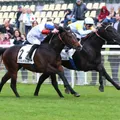
We bought Grand Glory for €2,500,000 for Xavier Marie and Haras de Hus. On the day of the sale, Thoroughbred Daily News reported that the Prix Jean Romanet (Group 1) winner would be the cornerstone of a new Thoroughbred breeding operation at Haras de Hus.
In the end, the mare stayed in training for one more season. In 2022, she finished third in the Prince of Wales’s Stakes, then fifth in the Prix de l’Arc de Triomphe.
€2,500,000
Hammer price
Gr.1
Prix Jean Romanet
5th
2022 Prix de l’Arc de Triomphe
Public sources: Thoroughbred Daily News, 4 December 2021; Thoroughbred Racing Commentary, 12 December 2021; France Galop, 1 May 2022; The Irish Field, 6 May 2022; English Wikipedia, articles “Grand Glory” and “2022 Prix de l’Arc de Triomphe”.
Grand Glory’s profileThe practical side of breeding
Transport, nutrition, equestrian property
Logistics can hold a breeding project back too. Our advice covers these three areas.
- 01
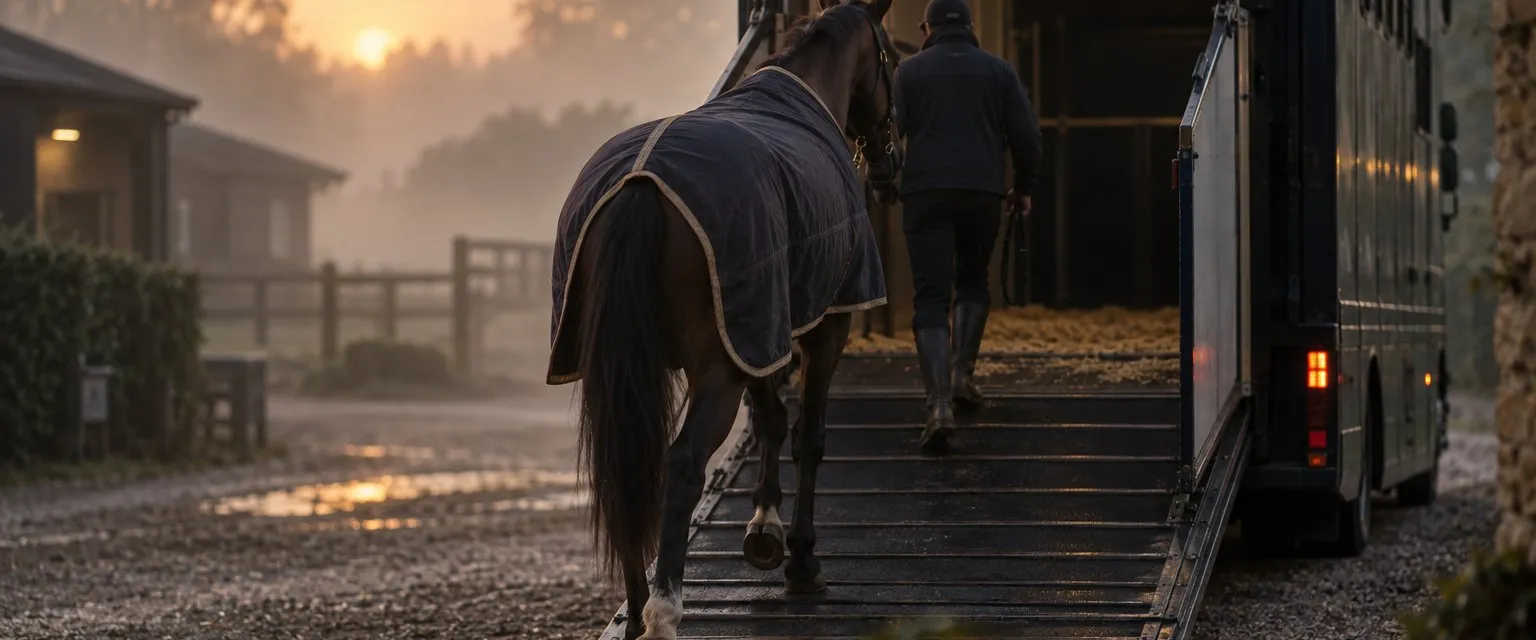
Transport
From a stud to a sale, from a sale to a yard, in France and abroad: moving horses takes preparation, identification documents and health formalities included.
- 02
Nutrition
An in-foal mare, a weanling and a horse in training do not have the same needs.
- 03
Equestrian property
A breeding operation is also a place: boxes, paddocks, facilities. We advise our clients on these projects.
An international clientele
A network in France and internationally
Most of our clients are based outside France. We advise them on their matings and on moving their horses, in France and abroad.
- 1,700+
- horses sold by the agency
- 32
- countries where the agency has sold horses
YOHEA brochure, July 2024
YOHEA brochure, July 2024
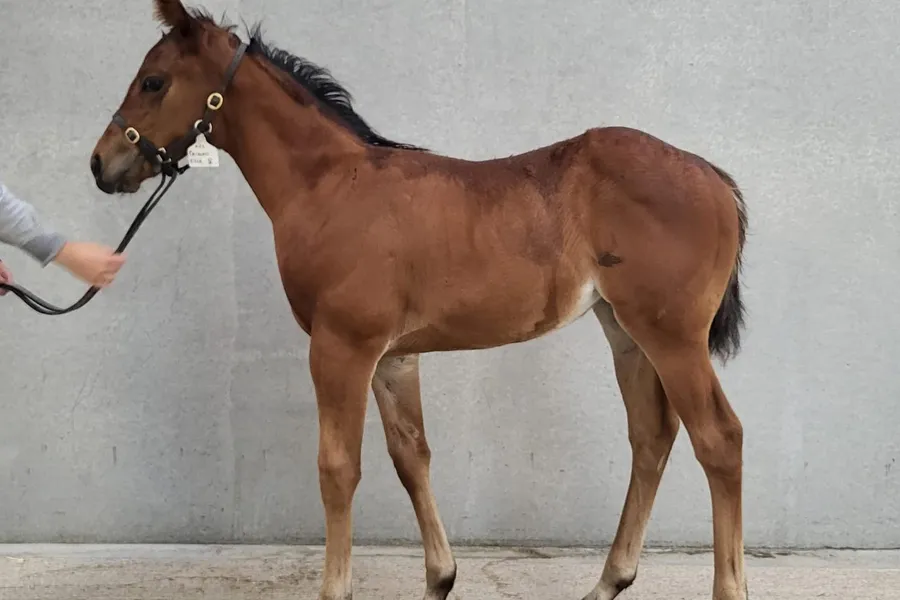
From foal to racecourse
What a mating sets in motion
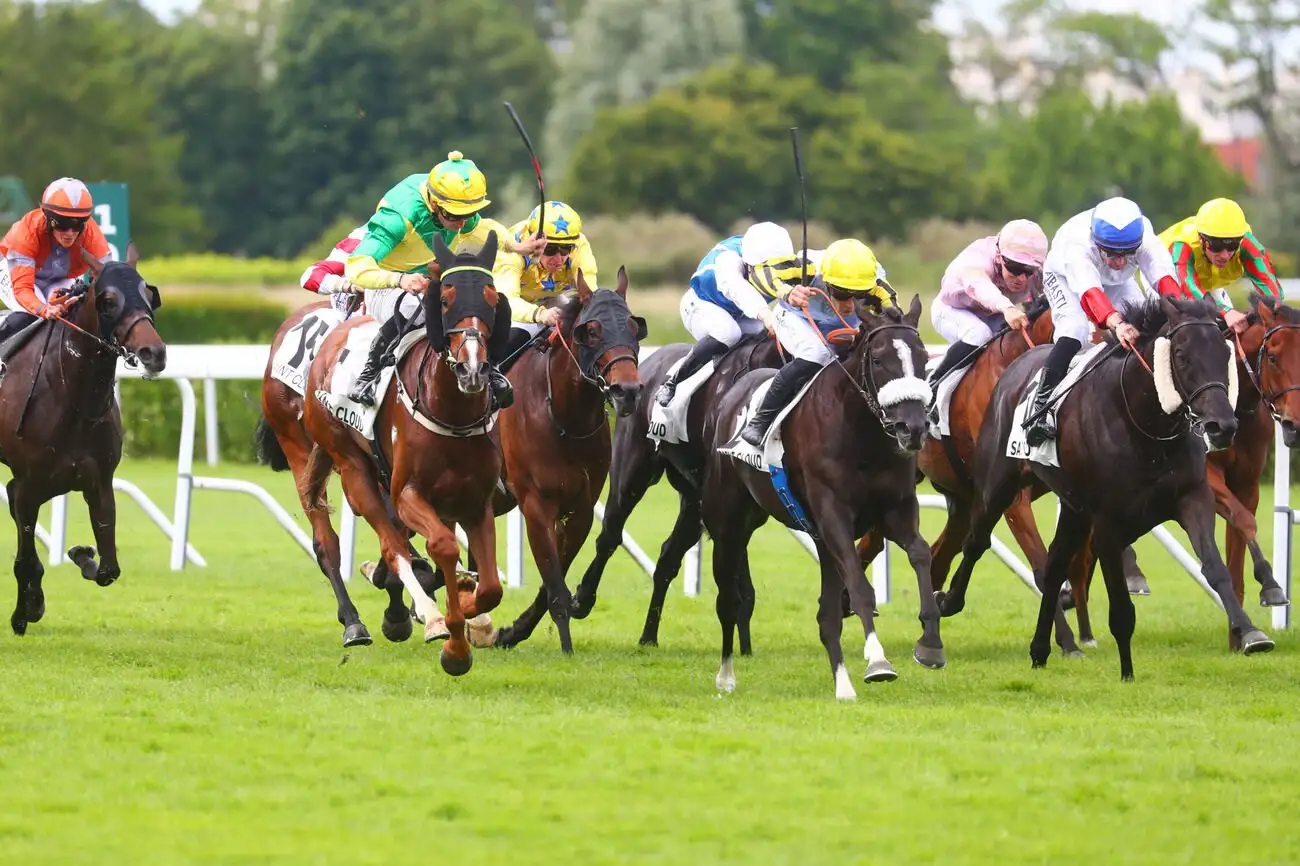
A choice of stallion is judged on the racecourse, once the foal is two.

Testimonial
“Her in-depth knowledge of Thoroughbreds, bloodlines and matings, together with her instinct for spotting potential, enabled her to found her own brokerage firm (YOHEA) […]”
Romane Borrione
Performance analyst for racehorse trainers (translated from French)
Frequently asked questions
What breeders ask us
How do you choose a mating for a broodmare?
By starting from the mare, never from fashionable stallions. Establish her profile (aptitude, physique, race record, past produce), shortlist a few stallions that make up for what she lacks, then decide between them on two criteria: the stud fee relative to the expected sale price of the foal, and how the resulting catalogue page will read.
What should you look for in a pedigree?
Six things, in this order: the dam’s actual produce, the black type in the first two generations, the family’s aptitude for trip and ground, whether the mating makes sense, verification of the bloodlines, and finally what the produce of the cross has fetched at recent public sales.
What is the stud book?
The stud book is the official register of a breed, recording births and parentage. For the Thoroughbred, registration in the stud book is a condition of being allowed to race. In France, the identification and traceability of horses fall under the IFCE, and race records are published by France Galop for Flat and jump racing and by LeTrot for trotting.
How is a racehorse transported?
By specialist horse transporters, in France and internationally. A journey takes preparation: the horse’s identification documents, health formalities for crossing a border, the right timing for an in-foal mare or a foal. Transport is one of the areas on which we advise our clients.
Do you also advise on equestrian property?
Yes. Alongside pedigrees and matings, our advice around breeding covers transport, nutrition and equestrian property. A breeding operation is also a place: boxes, paddocks, facilities. Tell us about your equestrian property project, and we will tell you what we can bring to it.
Further reading
From pedigree to racecourse
- Buying a racehorse
How reading a pedigree translates into a buying decision.
- Selecting a racehorse with potential
The selection criteria in detail, pedigree and conformation.
- Racing glossary
Black type, stud book, poulinière (broodmare): the terms of the trade explained.
- Our horses
The horses we have bought and sold.
Planning to breed?
Send us your mare’s pedigree
Her produce, her aptitude, her age: we will tell you what the market expects of her, and which stallions deserve to be compared.
- A first conversation, with no commitment
- Advice based on what the market actually pays
- Most of our clients are based outside France