




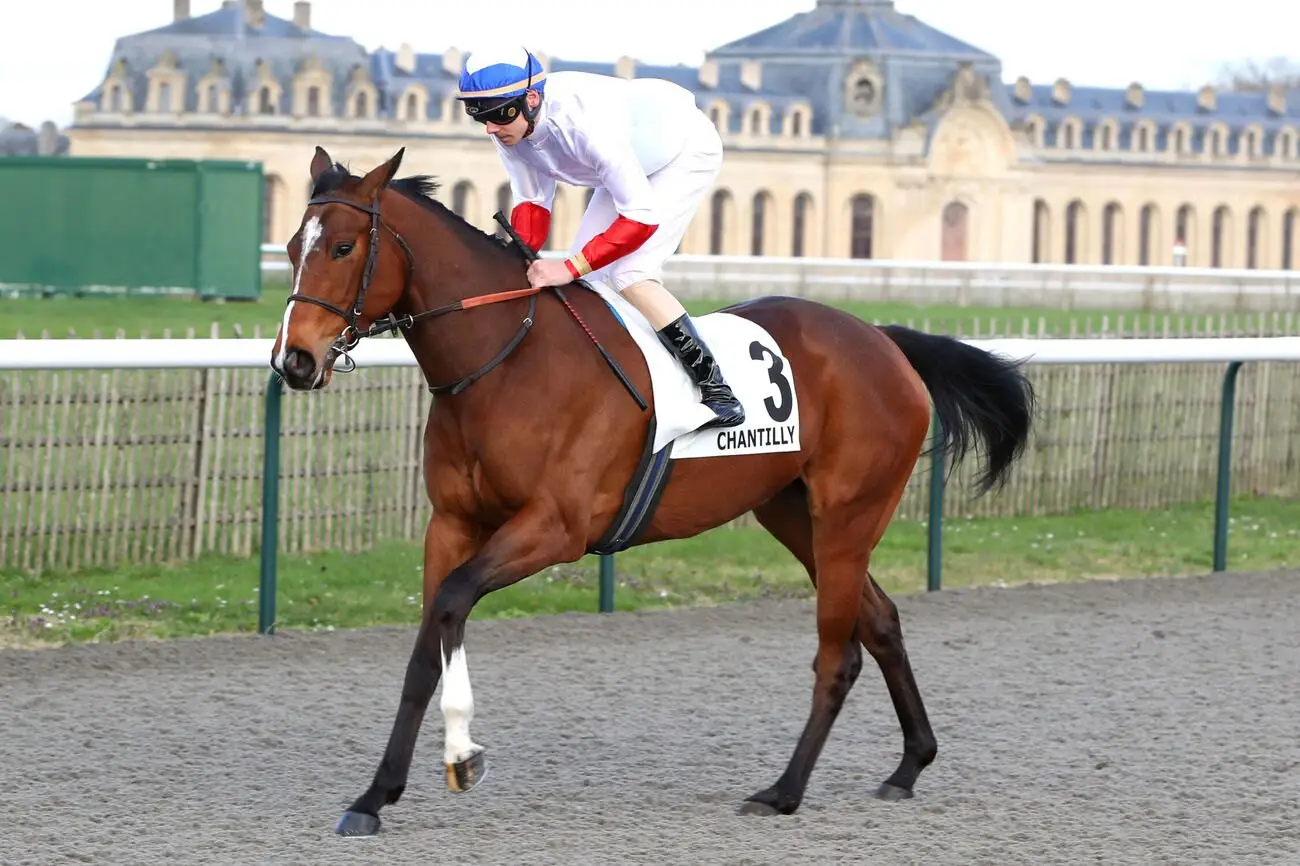
The buyer’s guide
Buying a racehorse in France
The registration you need, the real budget, the four ways to buy and the seven steps of a purchase, every amount with its source and date.
- Owner registration
- Budget
- Auctions
- Private sales
- Training
One registration
Owner registration, the only authorisation needed to race a horse
France Galop, LeTrot
4
Ways to buy, from the auction ring to the foal
7
Steps, from the written mandate to the horse going into training
The essentials
A purchase price, then twelve months of costs
Buying a racehorse in France means acquiring a Thoroughbred, a trotter or an AQPS, then racing it in your own colours once you are registered as an owner. There are four ways to buy: at auction, by private sale, out of a claiming race or as a foal.
The purchase price is only part of the commitment: France Galop puts the training fees for a horse in training in France at €1,500 to €3,000 a month, or €18,000 to €36,000 a year.
This guide covers horses bred to race, where a project runs to tens of thousands of euros from the first year. The market for riding, leisure or trekking horses is an entirely different one.
The price of a racehorse, cost by cost
Contents
Seven questions, one chapter for each
Read them in order, or go straight to the one that matters to you.
- 01Price and monthly costWhat a horse costs to buy, depending on the sale, then every month. Figures sourced and dated.
- 02Becoming an ownerOwner registration, who grants it, the forms of ownership and your obligations every month.
- 03Auction salesHow an auction works, the French sales calendar and the prices actually achieved at Deauville.
- 04The seven steps of a purchaseStep by step: the timing, the document produced and who is involved.
- 05Choosing a horsePedigree, conformation, movement, vet file: the real order in which an agent examines a horse, and how they make the call.
- 06Profitability and risksThe break-even calculation from published rates, and the risks set out without softening them.
- 07Flat, trotting, AQPS, jumpsThe four disciplines compared on entry price, time to a first run and governing body.
Benchmarks
The cost of getting in, in four public figures
Each amount carries its source and date. The detail, sale by sale, is in the chapter on the price of a racehorse.
€1,500 to €3,000
Monthly training fees for one horse in France
France Galop, becoming an owner FAQ, accessed 16 October 2026
€160,000
Median price at the August 2026 yearling sale, Arqana, Deauville
Arqana, The August Sale 2026 results
€23,000
Median price at the October 2025 yearling sale, Arqana, Deauville
TrueNicks (BloodHorse), October 2025
6%
Arqana buyer’s fee on top of the hammer price, excluding VAT, with VAT charged on top
Arqana, Buying page, accessed 16 October 2026
Where to buy
Four ways to buy, four pricing logics
Each also has its own wait before the first race and its own level of risk.
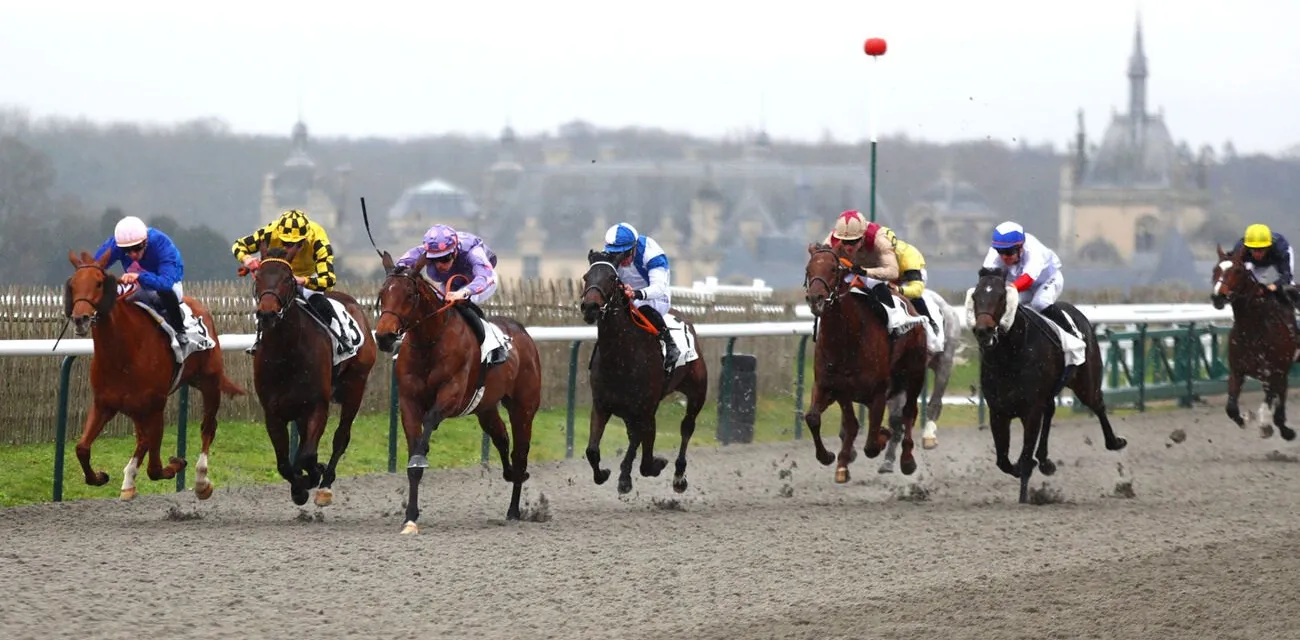
- 01
At auction
The most transparent route: public prices, the pedigree in the catalogue, and X-rays and endoscopies open to buyers’ vets at the major sales. At Arqana, allow a 6% buyer’s fee excluding VAT on top of the hammer price, then 20% VAT on the total for a horse of racing age, a yearling or a foal.
- 02
By private sale
Buying direct from a breeder, a trainer or an owner. The price is negotiated, the information is often fuller and no auction house fees apply. With no public reference price, it is also the route where a poorly advised buyer pays the most.
- 03
Out of a claiming race
The horse can be bought once the race is over. The claiming price shown on the racecard acts as a floor, and the highest claim wins. It has already raced, so you know what it is worth; what you need to find out is why its owner is letting it go.
- 04
As a foal
A foal born that year, bought privately from the breeder or at the breeding stock sales. The longest wait before a first race and the highest risk: nobody has yet seen the horse in work.
Choosing the sale
Same house, same age: a sevenfold difference.
At Arqana, a median of €160,000 for the August 2026 yearlings (296 offered) and €23,000 for the October 2025 yearlings (763 offered). Choosing the sale already means choosing your price level.
The method
The seven steps of a purchase
One action per step, in this order. The chapter on the seven steps to buying a racehorse gives the timing, the document produced and who is responsible for each.
- 01
Write down the mandate and the budget
A discipline, a time frame, a budget for the purchase and twelve months of costs, and a bidding limit written down before you walk into the sale. Choose the trainer now: the trainer sets the location, the monthly cost and the race programme.
- 02
Shortlist the lots
Catalogue, pedigree, inspection in the box and in hand, then a ranked shortlist with a limit for each lot.
- 03
Have the horse vetted
A pre-purchase vetting by a vet you appoint, never by the seller’s vet: clinical examination, X-rays, endoscopy of the airways where relevant.
- 04
Bid or negotiate
At auction, stick to the limit set in step 1: once the hammer falls, the sale is final. In a private sale, negotiate the price and what the sale contract guarantees.
- 05
Pay and register the transfer
At Arqana, a sale is deemed to be a cash sale. The change of ownership is then registered with France Galop or LeTrot, which allows the horse to run in your colours.
- 06
Arrange transport
From the sale venue to the training centre, to be organised before the sale. Buying abroad adds health certificates and export formalities.
- 07
Put the horse into training
Arrival, settling in, then work. The monthly costs start from this step.
Do you need to know the racing world to buy a racehorse?
No. France Galop requires no qualification or exam to become an owner. Owner registration, granted by France Galop for Flat and jump racing and by LeTrot for trotting, is applied for online and assessed on documents: proof of identity, proof of address, a tax notice, bank details. While the application is under review, a representative of the French Ministry of the Interior carries out a background check. The institution checks who is racing horses, not what you know how to do.
A successful first purchase therefore depends less on knowing the racing world than on the quality of the people around you. Three professionals are involved before you sign: an agent who searches and negotiates, a vet independent of the seller who examines, and a trainer who judges the racing potential. None of them can replace the other two. The full administrative process is set out in our chapter on the steps to becoming a racehorse owner.
How much do you need to commit?
Keep two amounts apart: the purchase price, paid once, and the cost of keeping the horse, paid every month for as long as it is in training. Confusing them is behind most nasty surprises.
For the purchase price, public sales give verifiable benchmarks. At Arqana’s August 2026 yearling sale in Deauville, 236 yearlings sold out of 296 offered, at a median price of €160,000 and an average of €277,682. At the October 2025 sale, the same house sold 600 out of 763, at a median of €23,000 and an average of €42,333. Same house, same breed, same age: the median varies by a factor of seven, for an October catalogue more than twice the size.
At auction, the hammer price is not the price you pay. At Arqana, a buyer’s fee of 6% excluding VAT is added, then VAT, calculated on the hammer price plus that fee: 20% for horses of racing age, yearlings and foals, 10% for covered mares, stallions and stallion shares. When the seller is not VAT-registered, which is announced from the rostrum, VAT applies only to the fee. A VAT-registered buyer recovers that VAT; a private individual does not.
For the cost of keeping the horse, France Galop puts monthly training fees in France at €1,500 to €3,000. For trotters, LeTrot publishes €25 to €50 excluding VAT a day, or €750 to €1,500 excluding VAT a month. On top come farriery, vet bills, transport, entry fees and, if you take it out, insurance.
The cost-by-cost breakdown, with sources and dates, is in our chapter on the price of a racehorse and its real monthly cost. How a sale session runs and the calendar of French sales are covered in the one on racehorse auctions.
Flat, trotting or jumps: which discipline to buy into
The discipline determines the entry ticket, the wait before the first race, the training location and the governing body. A Flat Thoroughbred can race from the age of two. A French Trotter costs less to train: LeTrot publishes training fees of €750 to €1,500 excluding VAT a month, where France Galop gives €1,500 to €3,000 for Flat and jump horses. An AQPS is bred for jump racing: the name is reserved for horses carrying at least 87.5% and less than 100% Thoroughbred blood.
The full comparison is in our chapter on choosing between Flat, trotting, AQPS and jumps, and the selection method, at the box and with the horse in hand, in the one on how to choose a racehorse.
What a bloodstock agent does for you
A bloodstock agent selects, assesses and negotiates horses on behalf of an owner, at the sales, in private deals and internationally. Agents are customarily paid by commission on the transaction. On a first purchase, an agent does four things you cannot do alone: see the horses before the sale, read a pedigree against the asking price, know the sellers’ market, and hold to your bidding limit when you would be tempted to go past it.
This is what we do. YOHEA, the agency founded in 2018 by Anne-Sophie Yoh-Benet, has sold more than 1,700 horses in 32 countries. Our racehorse buying page sets out what we commit to in a buying mandate.
Sources
- France Galop, Devenir propriétaire (becoming an owner), Obtenir son agrément (obtaining owner registration) and FAQ: registration in five steps, documents required, background check, 80% of applications processed within a month, training fees of €1,500 to €3,000 a month, distribution of prize money, owners’ premiums, advice to work with a trainer or an agent when buying. Accessed 16 October 2026. france-galop.com
- Arqana, The August Sale 2026 results, Deauville: 236 sold out of 296 offered, median €160,000, average €277,682, €65,533,000 under the hammer. Accessed 16 October 2026. arqana.com
- Arqana, October 2025 yearling sale, Deauville: 600 sold out of 763, median €23,000, average €42,333, total €26,421,000. Reported by TrueNicks (BloodHorse), 25 October 2025. truenicks.com
- Arqana, Vente d’Élevage (December breeding stock sale) 2025, Deauville: 666 sold, median €28,000, average €70,850, total €47,187,300. Reported by BloodHorse, December 2025. bloodhorse.com
- Arqana, Buying page and conditions of sale: buyer’s fee of 6% excluding VAT, VAT of 10% or 20% depending on the category of horse, VAT limited to the fee when the seller is not VAT-registered, cash sale, purchase mandate. Accessed 16 October 2026. arqana.com
- LeTrot, Devenir propriétaire (becoming an owner), Achat et coût d’un trotteur guide (buying a trotter and its costs). Accessed 16 October 2026. devenir-proprietaire.letrot.com
- AQPS: stud book rules for the Autre Que Pur-Sang (France Galop and the association of AQPS breeders and owners): at least 87.5% and less than 100% Thoroughbred blood.
- France Galop, Code des courses au galop (the rules of Flat and jump racing), article 183: buying horses entered to be claimed, a claim at least equal to the stated price, the highest claim wins. france-galop.com
Summary
Each way to buy, its price and its lead time
Prices recorded at public sales, with their source and date.
| Way to buy | Recorded price, source and date | Time before the first race | Who you deal with |
|---|---|---|---|
| Yearling, August sale | Median €160,000, average €277,682 (Arqana, August 2026, Deauville) | The year after the sale, at 2 at the earliest | Auction house, agent, vet, trainer |
| Yearling, October sale | Median €23,000, average €42,333 (Arqana, October 2025, Deauville) | The year after the sale, at 2 at the earliest | Auction house, agent, vet, trainer |
| Broodmare or foal, breeding stock sale | Median €28,000, average €70,850 (Arqana, Vente d’Élevage, December 2025) | At least two seasons for a foal, which races at 2 at the earliest | Auction house, agent, stud |
| Trotter, all routes | From €1,000 to several hundred thousand euros (LeTrot, guide to buying a trotter and its costs) | Varies with the horse’s age | Breeder, trainer, auction house |
| Claiming race | Claiming price shown on the racecard, which acts as a floor: the highest claim wins (Code des courses au galop, art. 183) | The horse is already racing | Racecourse company staging the race, trainer |
Cost of keeping the horse, to be added in every case: €1,500 to €3,000 a month in France, or €18,000 to €36,000 a year (France Galop, becoming an owner FAQ, accessed 16 October 2026). For trotters: €25 to €50 excluding VAT a day, or €750 to €1,500 excluding VAT a month (LeTrot, accessed 16 October 2026).
Before you commit
Budget for the horse and twelve months of training fees.
Purchase price, fees, then €18,000 to €36,000 a year in training fees: that is the budget you judge the project by.
Frequently asked questions
Your questions before a first purchase
What are the requirements for buying a racehorse in France?
The purchase itself needs no registration. To race the horse in your colours, enter it and collect its prize money, you need owner registration, granted by France Galop (Flat and jumps) or LeTrot (trotting). France Galop handles it online in five steps: account, documents (ID, proof of address under three months old, tax notice, bank details), colours, background check, validation, and processes 80% of applications within a month.
How much does it cost to buy a racehorse?
It depends on the route and the sale. At Arqana, the yearling median reached €160,000 in August 2026 and €23,000 in October 2025. LeTrot puts trotters from €1,000. In a claiming race, the price shown on the racecard is a floor. At auction, add the buyer’s fee and VAT, then €18,000 to €36,000 a year in training fees, according to France Galop.
Do you need a bloodstock agent?
It is not compulsory: you can bid yourself or deal with a breeder. France Galop nonetheless advises working with a trainer or an agent, and Arqana lets you appoint an intermediary to bid on your behalf, with the mandate handed in before the sale. On your own, you mostly see the public market, struggle to judge a private asking price and weigh up pedigree, vet’s report and bidding unaided.
Which breeds of horse race in France?
Several breeds race in France. The Thoroughbred on the Flat and over jumps; the Purebred Arabian and the Anglo-Arab in races restricted to them; the French Trotter in harness and ridden trotting races. The AQPS (Autre Que Pur-Sang, “other than Thoroughbred”), bred for jump racing, carries at least 87.5% and less than 100% Thoroughbred blood. The chapter on choosing a discipline compares them.
Does a racehorse make money?
Rarely: against €18,000 to €36,000 of annual costs, only a regular top-five finisher nears break-even. On the Flat, those five share the prize money (50, 20, 15, 10, 5%); the owner receives 75% of their horse’s share, plus a premium of 33% to 75% of the prize money, by age and race level, if it was born and raised in France (or treated as such). Full calculation: returns and risks.
Our expertise
When the guide is no longer enough
- Racehorse buying
The buying mandate: written brief, selection, veterinary file, bidding on your behalf.
- Racehorse selling
Valuing, presenting and selling a horse, at auction or privately.
- Racing stable management
Overseeing a string in training and at stud, once the horse is bought.
- Breeding and mating advice
Choosing the matings, starting from the mare’s pedigree.

Planning a purchase?
Let’s talk about your first horse
Tell us the discipline, the time frame and the budget. We will tell you what the market has to offer, and at what price.
- A first conversation, with no commitment
- Agency founded in 2018
- More than 1,700 horses sold in 32 countries