




Glossary
A glossary of French racing and bloodstock terms
The fifty-three terms in a sale catalogue, a training agreement or a race programme, defined for anyone new to the business.
- Sales
- Pedigree
- Racing
- Ownership
The essentials
Six terms to know before anything else
These six words come up everywhere: start with them, and the rest of the glossary will read more quickly.
- Foal: a young horse in its year of birth, from birth to 31 December.
- Yearling: a one-year-old horse, the age at which Flat horses go through the major auctions.
- Gré à gré (private sale): a sale negotiated directly between seller and buyer, without an auction.
- Black type: the bold type marking a horse that has won or been placed in a Group or Listed race.
- Repository: the veterinary file lodged by the seller before an auction.
- Bloodstock: Thoroughbreds considered as assets, and the business of buying and selling them.
The terms are listed in alphabetical order of the French word, as you will meet it in France, with the usual English equivalent in brackets where there is one. Each definition can be read on its own.
For the complete process, read the guide buying a racehorse in France. For questions about budget and ownership, see our frequently asked questions.
Jump to a letter: A · B · C · D · E · F · G · H · J · L · M · N · O · P · R · S · T · V · W · Y.
A
Agrément (owner registration)
Authorisation issued by the governing body (France Galop for Flat and jump racing, LeTrot for trotting) that allows an individual or a legal entity to run a horse in their colours. Granted on application and issued in the holder’s name, it is a condition for receiving prize money and premiums.
Allocation (prize money)
The sum paid to the owners of the placed horses in a race, according to the amount and breakdown set out in the race conditions, from the winner down to the last paid place. A share goes to the trainer, the jockey and the stable staff.
AQPS
Short for “Autre Que Pur-Sang” (other than Thoroughbred). A French racehorse that is not entered in the Thoroughbred stud book but carries a high proportion of Thoroughbred blood, most often by a Thoroughbred stallion out of an AQPS mare. It races mainly over jumps, and in Flat races restricted to it. The AQPS is considered later-maturing and tougher than the Thoroughbred, with a career that is often longer.
Association (ownership association)
A form of shared ownership: several people own a horse together. In Flat and jump racing, France Galop allows up to twenty people per association, including at least one “propriétaire couleurs” (the member whose colours the horse runs in). An agreement signed before the purchase sets out how decisions are made, how costs are shared and how members can exit.
B
Black type
Bold type in a sale catalogue, showing that a horse has won or been placed in a Group or Listed race. It is the currency of a pedigree: close black type, in the first three generations, directly increases the commercial value of a horse.
Bloodstock
An English term that French leaves untranslated. It refers to Thoroughbreds considered as racing and breeding assets and, by extension, to the business of buying and selling them and advising their owners. A bloodstock agent does this work under a mandate, for a buyer or a seller.
Breeze-up
An auction of two-year-olds preceded by a public breeze, a timed gallop over a short distance. The buyer sees the horse at real speed before bidding: there is less uncertainty than with a yearling, and the price reflects it.
C
Casaque (silks)
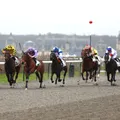
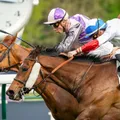
The jacket in the owner’s colours, worn by the jockey with a matching cap. The owner chooses the colours and registers them with the governing body, which checks that they have not already been allocated. They identify the stable on the racecourse and in race broadcasts.
Conformation
Assessment of a horse’s physical structure: limb alignment, angles, length of lines, quality of the joints, overall balance. Conformation alone does not predict performance, but some faults clearly increase the risk of injury and therefore weigh on the value of a lot.
Copropriété (co-ownership)
Owning a horse with others, each person bearing the costs and receiving the winnings in proportion to their share. In Flat and jump racing, it most often takes the regulated form of the association. It divides both the cost of entry and the monthly budget: a common way in for a first purchase.
Course à réclamer (claiming race)
A race in which every runner can be bought, or “claimed”, after the race, for a price at least equal to the one set in advance. The owner offers a horse at a price known beforehand, with no guarantee that it will be claimed; the buyer gets in at a lower cost.
D
Débourrage (breaking in)
The first stage of a young horse’s education, usually in the autumn of its yearling year: accepting the bit, the saddle and the weight of a rider, then the first canters in a straight line. Poorly handled breaking in is paid for throughout the horse’s career.
E
Écurie de groupe (racing club)
A structure, often called a racing club, that brings together people or capital owning one or more horses. France Galop accepts several types of company, the SAS (simplified joint-stock company) being the most common, and each participant holds shares in it. The cost of entry is generally low, and so is the shareholder’s involvement in racing decisions.
Éleveur (breeder)
The person or operation that breeds the foal, usually the owner of the mare. In France, the breeder receives premiums on the earnings of the horses they have bred, a mechanism designed to support French breeding.
Engagement (entry)
The entry of a horse for a race, lodged before a deadline, for a fee. The entry sets the horse’s actual programme. Withdrawing the horse after entries have closed counts as a forfait, which may remain payable depending on the race conditions.
Étalon (stallion)
An entire male used for breeding. His value is measured by his race record and, above all, by the performances of his offspring. A stallion whose first foals win sees his stud fee rise quickly, and with it the value of the foals already born.
F
Foal
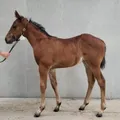
A young horse in its year of birth, from birth to 31 December. All Northern Hemisphere Thoroughbreds are deemed to be born on 1 January for the purpose of calculating their age, whatever their actual date of birth. Foal sales, at the end of the year, notably attract pinhooking professionals, who will resell the horse as a yearling.
Forfait (forfeit)
Withdrawal of a horse entered in a race, declared after entries have closed. Depending on the race conditions and the timing of the withdrawal, all or part of the entry fee remains payable.
G
Gains (earnings)
The total prize money and premiums a horse has received over its career. Public and tracked race by race, the figure is used to gauge a horse’s standing, to calculate its resale value and to establish its eligibility for certain races.
Galop (Flat and jump racing)
The discipline of ridden races at speed, run on the Flat or over jumps, and governed in France by France Galop. It mainly involves the Thoroughbred, the Purebred Arabian and, over jumps, the AQPS. See also trot and obstacle.
Gré à gré (private sale)
A sale negotiated directly between a seller and a buyer, without an auction or publicity. It allows a horse whose value depends on a small number of potential buyers to be traded, keeps the price confidential, and allows special conditions to be written into the contract, such as a share in future winnings.
Groupe (Group race)
The highest level of race classification, from Group 3 to Group 1, awarded according to the quality of the runners over several years. A win or a place at Group level earns black type and immediately changes the horse’s breeding value, particularly for a female.
H
Handicap
A race in which each horse carries a weight calculated to equalise its chances, based on its rating as assessed by the handicapper. This very common format in the French programme is the one in which an average horse, well placed, can win prize money.
Hongre (gelding)
A castrated male. Gelding is carried out to improve the concentration and manageability of a difficult horse. It removes any future breeding value: a gelding is worth only what it wins on the racecourse and what it will be worth in its second career.
J
Jument (mare)
A female over four years old. Beyond her racing career, a racemare retains a breeding value that depends on her race record and her female family. That is what makes buying a good-quality female less asymmetrical than buying a male.
L
Lad (stable lad)
A member of a training yard’s staff responsible for the daily care and ridden work of a small group of horses. The lad knows the horse best from day to day, and their opinion counts in the trainer’s decisions.
Listed
The category of race just below Group races, which also carries black type. Listed races are an intermediate step for an improving horse, and a win at this level is enough to significantly alter the commercial value of a young female.
M
Maiden
A horse that has never won a race and, by extension, a race restricted to such horses. Maiden races bring young horses into the programme: the trainer checks on the track what the preparation suggested.
N
Naisseur (registered breeder)
A status recorded with SIRE, the French central equine register, distinct from that of owner. Naisseur and éleveur usually refer to the same person. A foal-sharing agreement, which brings together the owner of a nomination (a stallion service) and the owner of a broodmare, can however lead to several co-naisseurs being declared.
O
Obstacle (jump racing)
The family of races in which horses jump hurdles or fixed fences: hurdle races, steeplechases and cross-country races. Horses start later than on the Flat, their careers are longer, and the AQPS plays an important role.
P
Pedigree
A horse’s ancestry over several generations, set out in catalogues with the performances of each ancestor and of the close female family. The pedigree sets the expected value of a lot before it has raced. It does not predict performance: it predicts the price.
Pension à l’entraînement (training fees)
The daily rate charged by the trainer for the full care of a horse: accommodation, feed, ridden work, staff. The largest item in an owner’s budget, it runs every month whether or not the horse races, and each trainer sets their own rate.
Pinhooking
Buying a horse at one stage of its life to resell it at the next without racing it: a foal bought to be resold as a yearling, a yearling bought to be resold at a breeze-up. It is a trading operation in its own right, with its own logic of margin and risk.
Plat (Flat racing)
Races run at the gallop without obstacles, over distances of about 1,000 to 4,000 metres. It is the discipline of the Thoroughbred and the Purebred Arabian, the one where careers start earliest and where most breeding value is concentrated.
Poulain (colt, foal)
A young male horse up to four years old. In everyday racing language, the word also refers to a mare’s offspring, whatever its sex. In catalogues, the sex and year of birth are always stated to avoid any ambiguity.
Pouliche (filly)
A young female up to four years old. A filly that earns black type acquires a breeding value independent of the rest of her racing career. That is why buyers sometimes pay a price for a female that bears no relation to her race earnings.
Poulinière (broodmare)
A mare used for breeding. Her value rests on her race record, on that of the foals she has already produced and on the quality of her female family. Broodmares are mainly sold at the end-of-year breeding stock sales, such as Arqana’s Vente d’Élevage (breeding stock sale) at Deauville, in December.
Produit (produce, offspring)
A foal resulting from the mating of a stallion and a broodmare, described in the catalogue by the formula “by such-and-such a stallion out of such-and-such a mare”. The word is used throughout the horse’s life to link it to its parentage.
Pur-sang anglais (Thoroughbred)
A breed created in England in the 17th and 18th centuries, selected for speed alone and registered in a closed stud book: only the offspring of two registered Thoroughbreds can itself be registered. It is the breed of Flat racing and of a large part of jump racing.
Pur-sang arabe (Purebred Arabian)
A breed of Eastern origin, raced in contests restricted to it, with an international programme supported in particular by the Gulf states. Its careers start later and last longer than those of the Thoroughbred, and its market follows a logic of its own.
R
Repository
The veterinary file lodged by the seller before an auction: X-rays and, depending on the sale, an endoscopic examination of the airways. Vets consult it on behalf of identified buyers. Having your own vet review it before bidding is part of a buyer’s normal work.
Réserve (reserve)
The minimum price set by the seller before an auction, below which the horse is not sold. A reserve set too high sends the horse home unsold, which marks it for subsequent sales. Setting the reserve is a commercial decision, not a wish.
RNA
Short for “Reserve Not Attained”, the note shown in a sale’s results when bidding has not reached the reserve; Arqana uses the word “Racheté” (bought back). The horse is not sold. The note remains visible in its public history and weighs on how it is marketed later.
S
Saillie (covering)
The mating of a stallion and a broodmare, charged to the mare’s owner at a published or negotiated stud fee. The contract sets out the guarantee, most often a live foal, meaning one born alive and standing, failing which the fee is not payable.
Steeple-chase (steeplechase)
A jump race over fixed fences, higher and more demanding than hurdles, run over long distances. It calls for late-maturing horses with stamina and good jumping ability, and in France it is the pinnacle of the jumps programme.
Stud book
The official register of a breed, kept by the competent authority, which records births, parentage and changes of ownership. The Thoroughbred stud book is closed: registration is the condition for racing, and an unregistered horse has no commercial existence.
T
Trot (trotting)
The discipline in which horses race at the trot, either harnessed to a sulky or ridden, governed in France by LeTrot. It is based on the French Trotter, a breed selected for this gait, and accounts for a large share of races and betting in France.
Trotteur français (French Trotter)
A French breed selected for trotting races, later-maturing than the Thoroughbred, with a longer career often continuing until the age of ten. Its market, its sales and its owner registrations, separate from those of Flat and jump racing, come under LeTrot.
V
Valeur handicap (handicap rating)
The rating given to a horse by the governing body’s handicapper, expressed in kilos (a French mark of 49, for example, corresponds to a rating of 108). It sums up the level shown on the racecourse, determines the weight carried in handicaps and changes after every run: it is the most convenient indicator for following a horse’s real progress.
Vente aux enchères (auction)
A public sale organised by an auction house, at which horses are offered lot by lot and knocked down to the highest bidder, above the reserve. In France, the main operators are Arqana for Flat and jump horses and for trotters, Osarus and Auctav. See racehorse auctions.
Visite vétérinaire (pre-purchase vetting)
An examination carried out before purchase, at the buyer’s request and by the buyer’s own vet. Its scope depends on the intended use: clinical examination, X-rays, endoscopy. It aims to identify the deal-breaking findings that should stop the transaction, and guarantees no future performance.
W
Work rider
A training rider in charge of fast work sessions, distinct from the lad who looks after the day-to-day. Their report after a training gallop is one of the most useful pieces of information a trainer has before entering a horse in a race.
Y
Yearling
A one-year-old horse, from the 1 January following its birth to 31 December of the same year. It is the age of the major auctions of Flat horses, held in France from mid-August to the autumn. A yearling is bought on its pedigree, its conformation and its veterinary file, never on a stopwatch.
On the ground
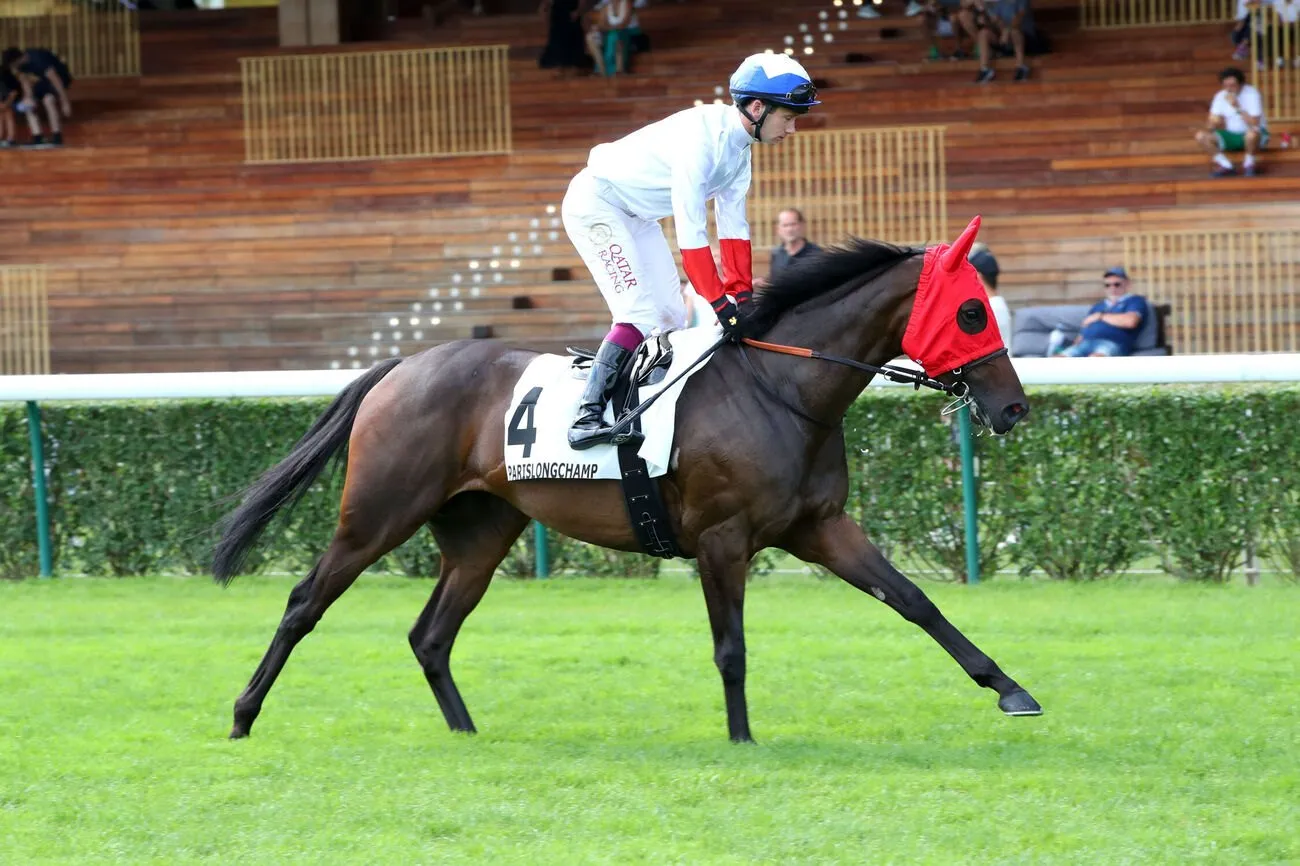
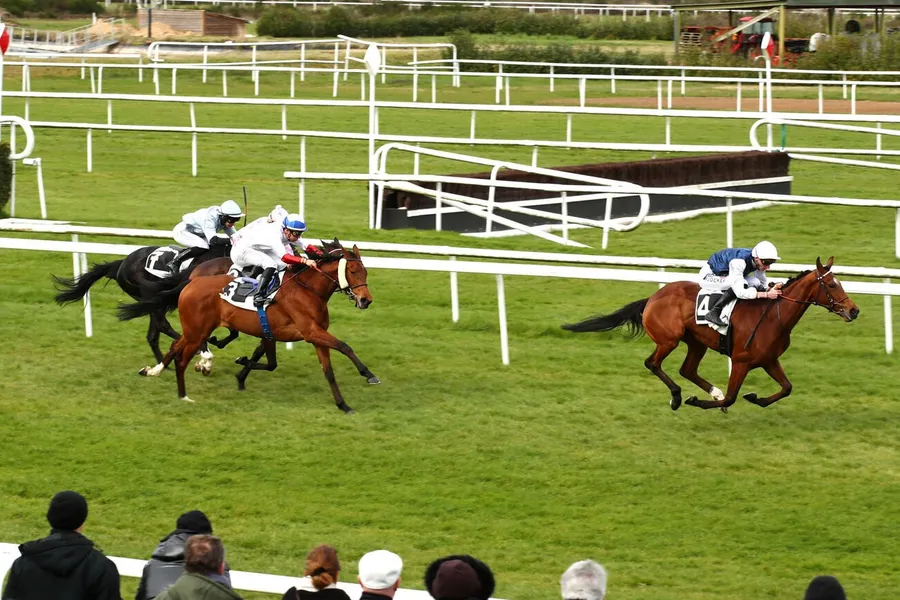
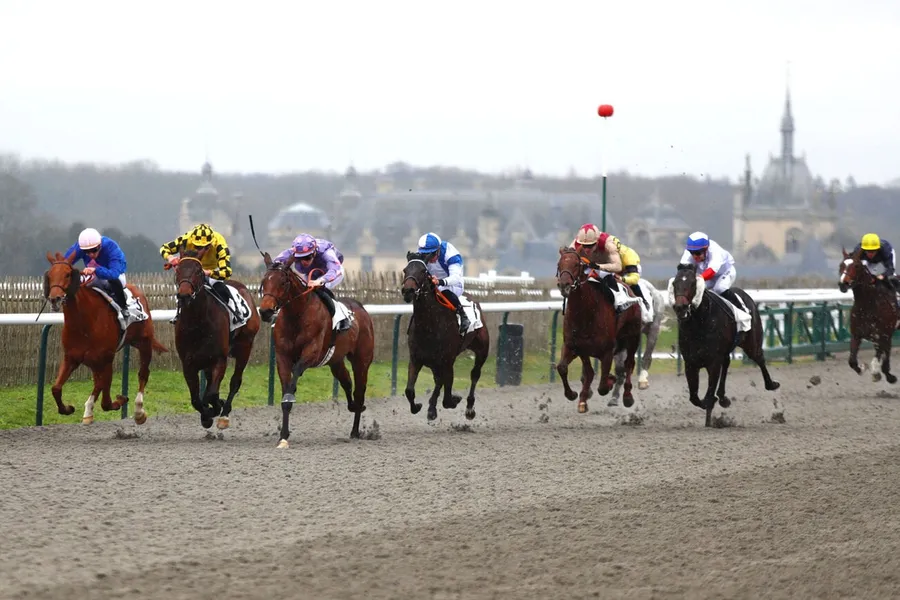
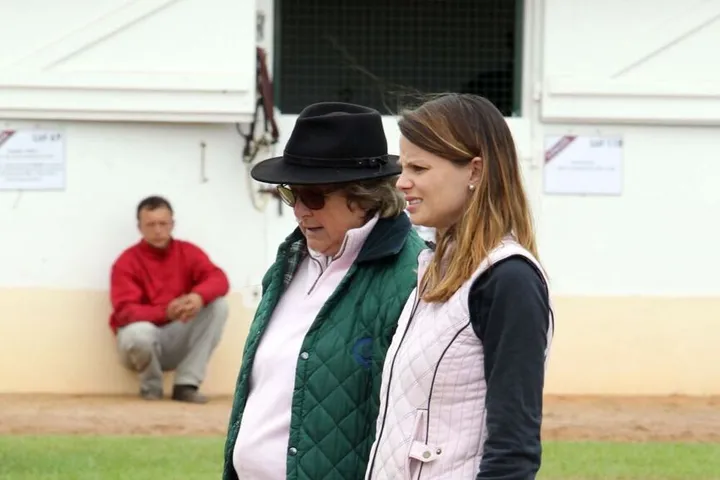
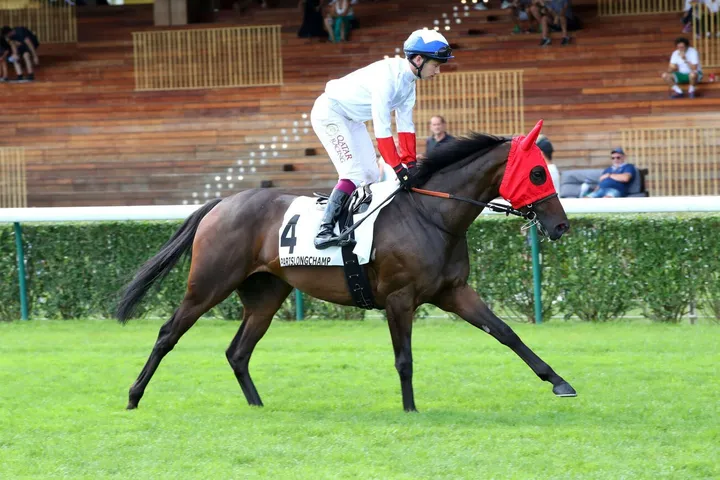
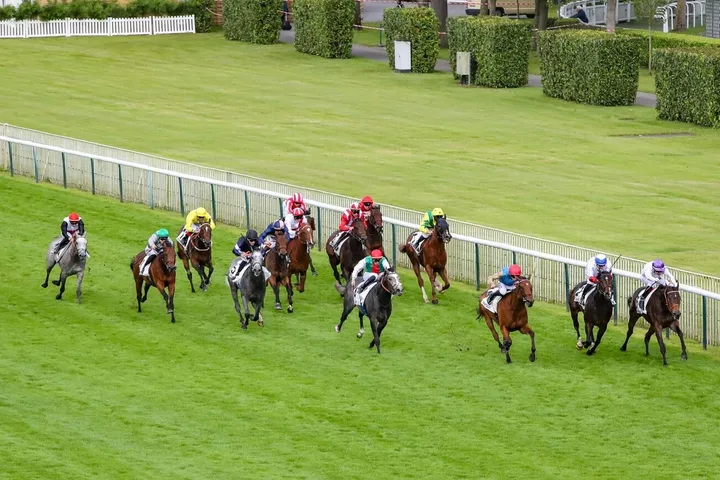
Three terms, as seen on a racecourse
In depth
The vocabulary, in context
The same terms, in our latest articles.
Further reading
These ideas, put into practice
- Yearling sales
Catalogue, repository, ring: what happens during a sale.
- Flat, trotting, AQPS, jumps
The chapter of the guide that compares the disciplines and the breeds.
- Breeding and mating advice
Pedigree, broodmares, coverings: our breeding expertise.
- Frequently asked questions
Short answers to the questions future owners ask.

A project in mind?